

A few months ago, I watched a decent product get handed to the wrong creator lineup and just… flatten. The brand was in beauty, mid-priced, solid margins, good reviews, actually a pretty easy sell on paper. But the first batch of creators all looked polished in the same way: perfect lighting, clean hooks, scripted talking points, zero friction. You could almost hear the brief.
Sales barely moved.
Then a smaller creator posted a messy bathroom-counter demo, forgot one of the official talking points, and spent 20 seconds talking about why she hated the pump at first. That video pulled comments, saves, and conversions. Not because it was “better content” in some abstract sense. It felt like a real person trying a real product.
That’s the thing about TikTok shop influencer marketing. Most brands don’t struggle because there aren’t enough creators. They struggle because they pick creators the way they’d pick ad talent, or worse, the way they’d pick Instagram partners from 2019.
If you’re trying to build a creator roster that can actually move product on TikTok Shop, here’s what tends to matter.
What good TikTok Shop creators actually look like
Follower count helps, sure. But it’s not the first filter I’d use.
The creators who perform well in TikTok shop influencer marketing usually have a few traits in common, and they’re not always obvious from the profile page. They know how to hold attention in the first two seconds. They can demo naturally. They understand how to sell without sounding like they’re reading from a teleprompter. And maybe most important, their audience is used to seeing them recommend things.
That last part gets missed a lot.
A creator can have strong views and decent engagement, but if their audience shows up for comedy skits and suddenly gets hit with a hard product pitch, the comments tell you immediately. People scroll, or they get weirdly hostile. On the other hand, a fitness creator who regularly reviews protein snacks, gym accessories, and recovery tools can sell a hydration product with very little resistance. The audience context is already there.
A good TikTok influencer agency will usually screen for this before they ever send names over. Not just “Is this creator in our category?” but “Has this creator trained their audience to accept product recommendations?”
That’s a very different question.
Don’t confuse aesthetic fit with sales fit
This is where brands get themselves in trouble.
A founder loves a creator because the page looks premium. The kitchen is spotless, the editing is tight, the creator seems “on brand.” Fine. But TikTok Shop isn’t a catalog shoot. Sometimes the creator with the nicest feed is the worst seller.
I’ve seen home product brands send out mops, organizers, and kitchen tools to creators whose homes looked like showrooms. Beautiful content, weak conversion. Then a mom in Ohio films the same product during actual cleanup after dinner and suddenly the comments are full of “where do I get this” and “does it work on tile?”
That’s not random. Product-market-content fit matters more than visual polish.
For beauty brands in the USA, this often means looking beyond the obvious skincare creators and checking who gets strong comment activity around routines, irritation, wear tests, and shade matching. For food brands, especially snack and beverage brands, you want creators who can make a product feel like part of a habit, not a one-off unboxing. For Amazon products, it’s often creators who are already in “things I actually use” mode, not people doing broad lifestyle content.
A strong TikTok Shop Affiliate Agency tends to be better at spotting this than an internal team seeing creators for the first time. They’ve usually watched enough underperforming “perfect fits” to know better.
How to vet creators without getting fooled by surface metrics
You don’t need a giant spreadsheet before you start, but you do need to look past likes.
Here’s what I’d check first:
Watch 15 to 20 videos, not just the top three
Top-performing pinned videos can hide a lot. You want to see consistency. Does the creator know how to open a video without stalling? Do they repeat the same format every time? Do sales videos feel noticeably stiffer than organic ones?
That stiffness matters. I’ve seen creators read a script so perfectly that the whole thing died. No pauses, no personality, no believable reason they’d care about the product. It looked approved by six people, which was the problem.
Read the comments like they’re research
Comments tell you things your landing page won’t.
If people keep asking whether a supplement causes jitters, whether a cleaning tool scratches wood, whether a beauty product works on textured skin, that’s useful. Those are objections your creator content should address. Sometimes the comments reveal the actual selling angle too. A product meant for travel gets traction because people are using it for dorm rooms. Happens all the time.
A seasoned TikTok influencer agency will pull these patterns out quickly and feed them back into briefs.
Check whether they can demo, not just talk
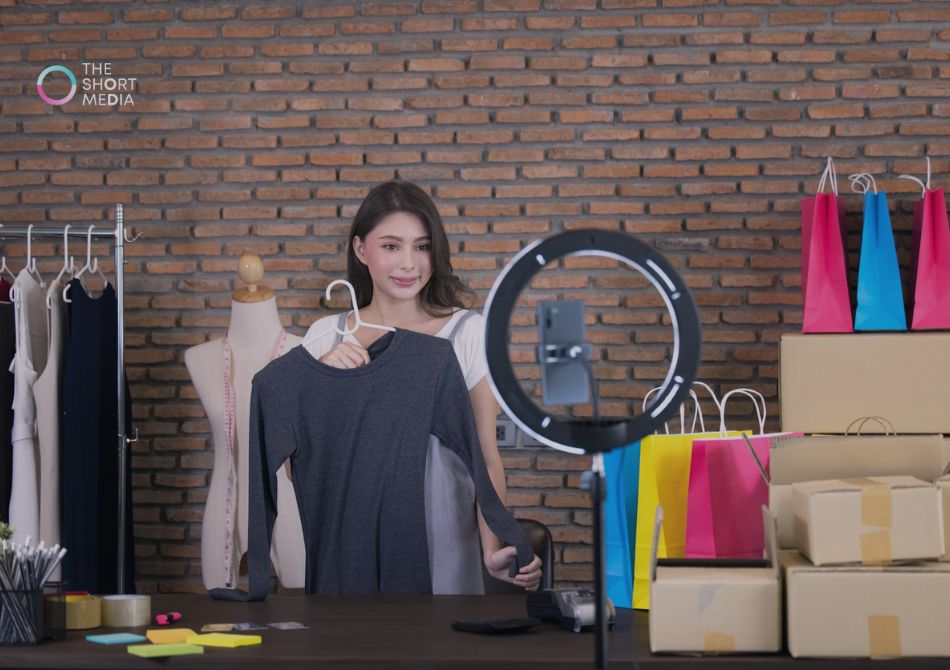
Some creators are strong storytellers but weak demonstrators. For TikTok Shop, that’s a problem. A lot of products need a visual proof moment. A stain lifting off fabric. A pan heating evenly. A lip tint surviving a coffee run. If the creator can’t show the product doing something, conversion usually gets softer.
That’s especially true in TikTok shop influencer marketing where impulse buys often happen because the product looked useful in a very immediate way.
Why a TikTok influencer agency can save you time
You can absolutely build your own creator program in-house. Plenty of brands do. But if your team is already juggling paid social, retention, Amazon, and retail, creator sourcing becomes one more thing that gets rushed.
And rushed sourcing is expensive.
A good TikTok influencer agency doesn’t just hand you a list of creators with rates. They should know who actually ships content on time, who can follow a brief without sounding robotic, who needs looser direction, who tends to miss posting windows, and who quietly drives strong Shop sales despite modest reach.
That operational stuff matters more than people admit. I’ve had campaigns where the “bigger” creator delivered late, posted off-brief, and underperformed. Meanwhile a smaller affiliate creator posted three variations in five days and gave the paid team usable whitelisted assets too.
If your main goal is scaling affiliate volume, a TikTok Shop Affiliate Agency can be even more useful. They’re usually set up to recruit at scale, manage outreach, handle product seeding, track creator performance, and keep a roster moving. That’s hard to do well if your internal team is treating it like a side project.
The brief matters, but over-briefing kills performance
There’s a narrow line here.
Brands need message control. Totally fair. But if every creator gets the same hook, the same proof point order, and the same CTA, the content starts to feel cloned. TikTok users can smell that instantly.
Give creators the non-negotiables:
– what claims they can and can’t make
– what the product actually solves
– what objections to address
– what offer or Shop mechanic matters
Then leave room for how they naturally talk.
One of the better food launches I saw in the US market worked because the brand stopped forcing “healthy snack” language and let creators describe the product the way they already described snacks in their own lives: “I keep these in my car,” “I eat this after pickup before I make dinner,” “this is better than gas station trail mix.” Much more believable. Much more useful.
A solid TikTok Shop Affiliate Agency will usually push back if a brand brief is too polished to perform. Honestly, that pushback is part of the value.
Build a bench, not a one-hit roster
You probably won’t find your best TikTok Shop creators in round one.
Some creators need a second product angle. Some categories need more testing across age groups, regions, or use cases. A home gadget might do fine with suburban family creators but really take off with apartment renters in New York or Chicago. A beauty product may convert better with “get ready with me” creators than with dedicated review creators. You don’t know yet. That’s normal.
This is why TikTok shop influencer marketing works better when brands think in waves instead of hero partnerships. Test 20 creators. Find the five who can actually sell. Rebrief them. Give them variation prompts. Use comments to sharpen the next round.
That process gets much easier when a TikTok influencer agency or TikTok Shop Affiliate Agency is tracking not just views, but conversion behavior, posting velocity, content quality, and repeatability.
Because one viral post is nice. Repeatable creator output is what builds a channel.
A few signs you’ve found the right creators
Not glamorous, but useful:
– Their content makes the product make sense fast.
– They don’t sound like they swallowed your brand deck.
– Their audience asks practical buying questions.
– They can film a decent demo without a production team.
– They post with enough frequency that one miss doesn’t kill momentum.
– They’re comfortable selling, but not in that old-school “buy now” way that makes everything feel sticky.
And if a creator’s best-performing product content looks like it was filmed in a kitchen, car, or messy bedroom? Don’t overcorrect it. I’ve seen brands try to “upgrade” exactly the thing that made the content work.
FAQs
1. How many TikTok Shop creators should a brand start with?
Usually more than you think. Ten creators can give you some signal, but 20 to 30 is often where patterns start to show, especially if you’re in beauty, food, or home categories where angles vary a lot.
2. Should I prioritize follower count or engagement rate?
Neither on its own. I’d rather work with a creator who has a proven history of product demos and buyer-intent comments than someone with a pretty engagement rate built on unrelated content.
3. Is it better to work with one big creator or lots of smaller ones?
For most brands, especially early on, lots of smaller ones. You get more creative variation, more testing, and less risk tied to one post. Big creators can help, but they’re not always the ones moving the most Shop volume.
4. What does a TikTok Shop Affiliate Agency actually do?
Usually a mix of creator recruitment, outreach, seeding, affiliate onboarding, performance tracking, and content coordination. The better ones also know which creators are worth repeating and which ones looked promising but never really converted.
5. How do I know if a creator is too scripted?
Watch their sponsored posts next to their organic ones. If their voice changes, their pacing gets weird, or they suddenly start using brand language no normal person would say out loud, that’s your answer.
6. Can a TikTok influencer agency help if we already have an internal social team?
Definitely. Internal teams often know the brand better, but a TikTok influencer agency can speed up sourcing, negotiation, and testing. It’s less about replacing your team and more about removing bottlenecks.
7. How long should I test creators before deciding who to keep?
Give it a few posts if the creator is responsive and the first concept wasn’t a total miss. Sometimes the first video is too safe, and the second one, with a better hook or stronger demo, does much better.
8. Are creators enough, or do I still need paid support?
Creators alone can work for some products, but paid usually helps extend the winners. A lot of strong US brands treat creator content as both conversion media and creative testing. Smart approach, honestly.
9. What’s the biggest mistake brands make with TikTok shop influencer marketing?
Trying to control the content too tightly. Second biggest? Picking creators because the page looks expensive instead of because the creator can actually sell.