

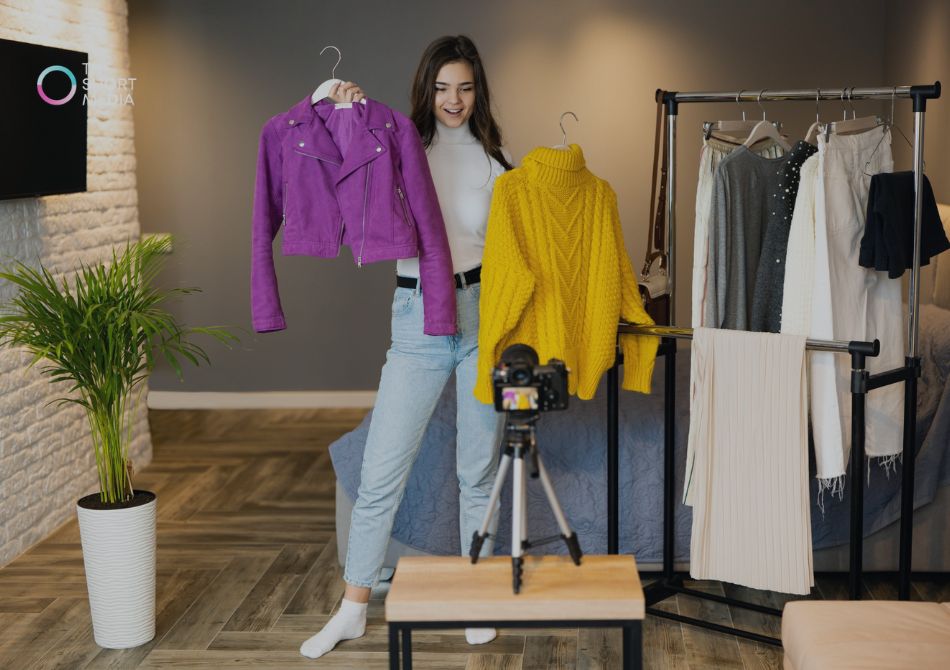
A few months ago, I watched a beauty brand spend three weeks polishing Amazon images, rewriting bullets, and arguing over A+ content modules… while a creator they barely briefed sold out a shade bundle on TikTok in a weekend from her apartment bathroom.
That pretty much sums up where a lot of US brands are stuck right now.
They’re not choosing between “old” and “new.” They’re choosing between two very different growth engines. Amazon FBA still does what Amazon has always done well: capture demand when someone already kinda knows what they want. TikTok is messier. Faster. Sometimes annoyingly unpredictable. But when tiktok e commerce clicks, it can move product in a way that feels closer to retail hype than marketplace optimization.
And in 2026, that’s the real comparison. Not which platform is better in the abstract. Which one is helping US brands grow faster, with fewer delays between attention and purchase.
Amazon still wins on intent. TikTok wins on momentum.
If you’ve worked on Amazon for any length of time, you know the rhythm. Rankings matter. Reviews matter. Price definitely matters. Inventory planning matters more than most founders want to admit. You can build a very solid business there, especially in supplements, household goods, pet products, and replacement-item categories where people are searching with a job to do.
But growth on Amazon FBA often looks like operational excellence. Better listing conversion. Better PPC efficiency. Better review velocity. That’s real growth, sure, but it can be incremental unless you’ve got a true category wedge.
TikTok is different. With tiktok shop ecommerce, growth often starts before demand exists in any trackable search volume. A protein snack brand can go from “nobody knows us” to “we’re backordered in the Midwest” because a few creators framed the product the right way. Not with a polished ad, either. Usually with a slightly chaotic demo in a kitchen, or a car, or between school pickup and the gym.
That’s not always sustainable. But it is fast.
For US brands trying to compress discovery, persuasion, and checkout into one session, tiktok shop ecommerce has become hard to ignore.
Where tiktok e commerce is actually moving faster
The brands growing quickest on TikTok in the US usually have one thing in common: they sell something that shows well.
That doesn’t mean it has to be flashy. It means there’s something to demonstrate, compare, react to, or explain in under 30 seconds.
Beauty is the obvious example. A concealer with a clear before-and-after can travel quickly. Same with pimple patches, heatless curl tools, lip stains, or body care products with a visible texture payoff. I’ve also seen home products do well when the demo is dead simple. A grout cleaner. A storage fix. A weirdly satisfying pet hair remover. Stuff that would look boring on an Amazon search results page can suddenly take off in-feed.
Food and beverage is more mixed, but not impossible. Snack brands, hydration products, and anything with a strong taste-test angle still have room. The catch is creative fatigue sets in fast. If every creator says “I was skeptical at first,” performance drops. People can smell a script from frame one. That’s been true for a while, and somehow brands still do it.
For these categories, tiktok e commerce often grows faster than Amazon because it creates demand while closing the sale at the same time.
Amazon usually needs the demand to show up first.
The hidden drag on Amazon FBA growth
A lot of operators won’t say this out loud, but Amazon growth in 2026 can feel expensive even when sales are climbing.
You may be paying for:
– Rising ad costs in crowded categories
– Margin pressure from fees and discounting
– Inventory storage headaches
– Review management that feels like a full-time side quest
And then there’s the copycat problem. If you get traction with an unremarkable product, somebody will list a version of it quickly. Sometimes several somebodies. That doesn’t kill good brands, but it does flatten easy wins.
For many DTC brands, Amazon FBA is still necessary. It’s where customers go to confirm price, shipping speed, and legitimacy. It’s also where your retail launch can get a second life if shoppers see the product in Target, then check Amazon later.
Still, if we’re talking pure speed of growth, Amazon often asks for patience and process. tiktok shop ecommerce can be more forgiving early on, especially if your product has a visual hook and your team can turn around content fast.
Why tiktok shop ecommerce feels closer to modern QVC than marketplace selling
That’s probably the simplest way to explain it to skeptical founders.
A strong TikTok Shop setup isn’t just a storefront. It’s hosts, creators, affiliates, clips, reposts, comments, objections, social proof, urgency, and checkout all stacked together. Some of the best-performing US brands on the platform aren’t running “campaigns” in the traditional sense. They’re feeding a content-and-affiliate machine.
And the comments matter more than people think.
I’ve seen comment sections reveal the exact reason a product page wasn’t converting. A fitness recovery brand kept emphasizing performance benefits, but comments were full of people asking if the material would irritate sensitive skin. The sales page barely addressed it. Once they fixed that, conversion improved across channels, not just TikTok.
That’s one reason tiktok marketing for brands has become more operational than many teams expected. It’s not just creative ideation. It’s creator sourcing, moderation, offer testing, landing page feedback, retention analysis, and inventory coordination. Messy stuff.
The brands doing well with tiktok marketing for brands usually aren’t precious about their content. They don’t insist every video match the brand book. They care more about whether it feels native and whether it sells.
Where Amazon FBA still has the edge
There are categories where Amazon remains the easier bet.
If the product is replenishable, highly searched, comparison-shopped, or practical to the point of being unsexy, Amazon is still a machine. Think air filters, collagen powder, charging accessories, baby safety gates, office organizers. You can absolutely sell these on TikTok, but the creative burden is higher and the pace can be annoying. Sometimes a founder wants predictable volume, not a content treadmill.
Amazon also tends to work better for brands that are less comfortable with creator-led selling. Some internal teams still struggle with the looseness required for tiktok marketing for brands. They over-brief creators, over-edit footage, join trends two weeks too late, then wonder why everything feels stiff.
I’ve seen brands send creators six pages of talking points for a 20-second video. Unsurprisingly, the result looked like homework.
Amazon doesn’t ask for charisma. It asks for discipline.
So where are US brands growing faster in 2026?
If we’re talking average, broad-based, dependable scale across lots of product categories, Amazon FBA is still huge. No surprise there.
If we’re talking speed — especially early acceleration, new customer acquisition, and breakout moments — TikTok is where more US brands are seeing faster movement.
That’s especially true for:
– Beauty and personal care
– Home problem-solvers
– Trend-sensitive wellness products
– Fashion accessories
– Giftable products
– Founder-led or creator-friendly brands
The catch is that tiktok shop ecommerce isn’t passive. It rewards volume, responsiveness, and a tolerance for creative unpredictability. You need enough content, enough affiliates, enough testing, and enough operational flexibility to keep up when something suddenly works.
That’s why the smartest brands aren’t really choosing one or the other.
They use TikTok to create demand and Amazon to catch the spillover. They let tiktok marketing for brands shape messaging, then bring those learnings into PDP copy, email, and retail sell-in. They treat tiktok shop ecommerce as a revenue channel, not just an awareness play, while still keeping Amazon tight for shoppers who want Prime shipping and familiar checkout.
That combo is where a lot of the serious growth is happening.
Not glamorous. Just practical.
What US teams keep getting wrong on TikTok
A few patterns keep showing up:
They treat creators like actors
The moment a creator reads the hook too perfectly, performance usually drops. You can almost feel the audience scroll. Good creator content has a little friction to it. Slightly off phrasing. An unscripted aside. A real objection handled in a normal voice.
That’s a big part of tiktok marketing for brands now: finding people who can sell without sounding like they’re selling.
They wait too long to repeat what works
Some teams are so worried about “fatiguing the audience” that they abandon winning angles after a week. Meanwhile, the uglier, lower-production kitchen demo keeps outperforming the studio cut. I’ve seen this happen with cleaning products, supplements, and even premium cookware.
They separate paid and organic too much
The best operators don’t draw a hard line. Their paid team watches affiliate content. Their social team watches comments. Their ecommerce lead knows which creator bundles are converting. That’s how tiktok e commerce tends to mature inside a brand: less channel siloing, more shared feedback loops.
Final thought
If you want stable, search-driven scale, Amazon FBA is still hard to beat.
If you want faster breakout growth in 2026, especially in categories that demo well, tiktok e commerce is where more US brands are finding it first.
Just don’t expect it to behave like Amazon. It won’t. That’s kind of the point.
FAQs
1. Is TikTok Shop replacing Amazon for US brands?
Not really. For most brands, it’s becoming another serious sales channel, not a total substitute. Amazon still has stronger intent-driven shopping behavior and more predictable search demand.
2. Which grows faster for a new beauty brand in 2026?
For beauty, TikTok often has the edge early. If the product shows visible results and creators can demo it naturally, tiktok shop ecommerce can move much faster than waiting for Amazon reviews and ranking momentum.
3. Does Amazon FBA still matter if a brand is strong on social?
Absolutely. A lot of customers still check Amazon before buying somewhere else, even after seeing a product on TikTok. It’s a trust and convenience layer, especially in the US.
4. What kinds of products struggle on TikTok Shop?
Products that are hard to explain visually, have weak margins, or need a lot of technical education can be tougher. Local services can use TikTok for lead gen, sure, but the Shop model itself is better for physical products with a clear demo.
5. How important are creators in tiktok marketing for brands?
Pretty important, and not just for reach. They give you message testing at scale. You’ll often learn more from 20 creator videos and their comments than from a brand brainstorm that ran long and said very little.
6. Can established retail brands win on TikTok Shop too?
They can, but they usually need to loosen up. Retail brands often bring polished assets that look expensive and perform… fine. Then a handheld creator clip with decent lighting and a specific use case beats it.
7. Is TikTok Shop only good for impulse buys?
No, but impulse-friendly products do have an easier time. Higher-consideration items can still work if the content handles objections clearly and the offer is simple enough to act on in the moment.
8. What’s the biggest mistake brands make with tiktok marketing for brands?
Over-controlling it. That, and showing up late with trend-chasing creative that already feels stale. A brand doesn’t need to be chaotic, but it does need to move.