

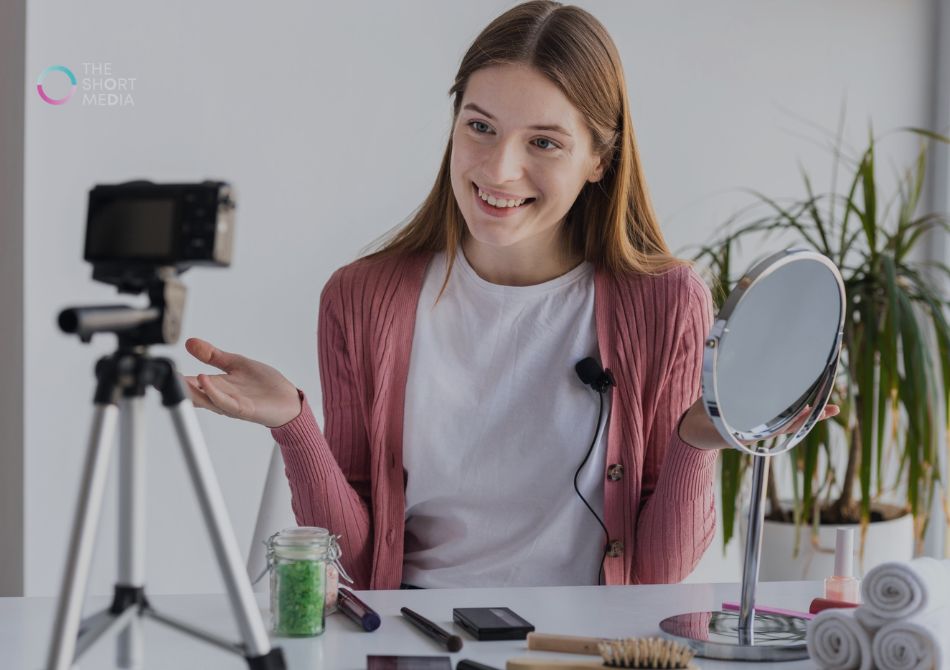
I’ve watched brands spend $15,000 on polished video shoots, then get outperformed by a 22-second clip filmed next to a kitchen sink.
Not always. But often enough that it stops being surprising.
That’s the weirdly useful thing about TikTok: the ad that scales usually doesn’t look like the ad the brand wanted to make. It looks like something a real person would actually post, with just enough structure to sell. Not too scripted. Not too “campaign.” And definitely not the trend your social manager found after it had already peaked.
If you’re trying to figure out what actually makes a TikTok creative worth putting more budget behind, the answer usually isn’t “high production value” or “viral energy.” It’s whether the ad gives the algorithm, and the viewer, enough proof to keep going.
A good TikTok creative agency knows this. The ones that don’t tend to chase aesthetics, copy what worked for another brand, and call it testing.
The creative that scales usually earns attention fast
This part gets oversimplified. People say the first two seconds matter, which is true, but not in a vague “grab attention” way.
The opening has to create a very specific kind of curiosity. A beauty ad might start with someone saying, “I thought this was another overhyped Amazon blush, but…” A home product ad might open on a genuinely annoying mess, not a staged one. A local med spa in Texas might show a front-desk moment or a client reaction that feels normal, not glossy.
The hook works when it feels like a person is about to tell you something useful, embarrassing, surprising, or slightly opinionated.
I’ve seen a creator ruin a good script by reading it too perfectly. Every line landed with the same energy. It felt rehearsed in the bad way. Then the brand re-shot the same concept with rougher delivery, a couple of natural pauses, one line half-mumbled, and performance improved. Not because “authenticity” is magic. Because it felt watchable.
A solid TikTok advertising agency will test hooks as separate creative variables, not just swap captions and call it iteration.
A TikTok creative agency looks for signals, not just CTR
Click-through rate matters. Thumbstop rate matters. But if you’ve run enough TikTok, you know early metrics can flatter a bad ad.
Some creatives get cheap clicks because they’re entertaining or confusing. That doesn’t mean they deserve scale.
What you want is a mix of signals:
– Strong hold rate in the first few seconds
– Comments that reveal actual buying intent or curiosity
– Conversion behavior that doesn’t collapse once spend increases
– A message angle that can support variations
This is where a TikTok creative agency earns its keep. Scaling isn’t about finding one lucky winner. It’s about spotting the ad with enough structural strength to survive more impressions.
For example, I worked on a fitness product where the best-performing ad wasn’t the funniest one or the one with the highest CTR. It was a creator demo filmed in her apartment hallway, showing exactly how she used the product before work. The comments were full of practical questions: sizing, setup time, whether it worked on hardwood floors. That told us the concept had legs. The landing page hadn’t answered half of those objections, by the way.
That’s the kind of thing a good TikTok Ads Management Service should catch quickly.
The offer has to be clear without sounding like an ad read
A lot of brands miss here. The creative performs okay at low spend, then stalls because viewers never fully understood what was being sold, who it was for, or why they should care now.
You don’t need to hammer the offer. TikTok viewers are pretty good at piecing things together if the story is clear. But they still need the basics.
That means:
– what the product is
– what problem it solves
– what makes it different enough
– why this person is talking about it
Simple. Not simplistic.
A TikTok advertising agency that knows what it’s doing will push for clarity early in the script, especially for products that aren’t instantly obvious. Think supplements, kitchen gadgets, posture tools, skincare devices, stuff with a learning curve. If the viewer spends eight seconds trying to decode the product, you’ve probably lost them.
I’ve also seen food brands bury the actual item until the end of the video. Nice editing, decent pacing, zero scale. People were watching but not buying. Once we moved the product reveal up front and let the creator talk through taste, texture, and price in a more casual way, conversion improved.
Not dramatically overnight. Just enough to matter.
Good scaling creative leaves room for iteration
This is a big one, and it’s where a lot of teams get fooled by one-hit creatives.
A video worth scaling usually contains a repeatable angle. Maybe it’s a problem-solution setup. Maybe it’s a side-by-side comparison. Maybe it’s a founder clip that works because the promise is strong, not because the founder happened to be charismatic that day.
If the concept can’t be remade with new creators, new hooks, or new edits, it’s fragile.
A strong TikTok Ads Management Service should be asking:
Can we make five more versions of this without watering it down?
That’s a better scaling question than “Is this our winner?”
The best creative systems I’ve seen from a TikTok creative agency are built around modular ideas. One angle becomes:
– a UGC testimonial
– a product demo
– a comment reply ad
– a stitched reaction
– a retail-focused version for Target or Walmart launch support
That matters for US brands especially. A DTC skincare product may need one version for direct site conversion, another for Amazon traffic, another for retail awareness in specific regions. Same core message, different framing.
Comments tell you what the ad is really doing
This gets ignored way too often.
Comments are where you find out whether the creative is building trust, triggering skepticism, or attracting the wrong audience entirely. And sometimes they reveal the exact line that should become your next hook.
I’ve seen comments like:
“Okay but does this actually work on textured hair?”
“Would this hold up in a small apartment?”
“Why is nobody talking about the refill cost?”
“Wait, is this at CVS now?”
That’s not noise. That’s creative strategy sitting in plain sight.
A smart TikTok advertising agency doesn’t just moderate comments or hide the negative ones. They mine them. If five people ask the same thing, the next creative should answer it. If viewers think the product is more expensive than it is, fix the framing. If they’re confused about how it compares to a competitor, make the comparison ad.
One of the better-performing home product ads I’ve seen came directly from a skeptical comment. The original video showed the product working, but people assumed it was edited. So the next version was slower, less polished, filmed in bad afternoon lighting, and showed the full demo without cuts. It beat the cleaner version.
Why some ads die the second you raise spend
Usually because they were novelty-driven, too narrow, or dependent on one creator’s charm.
That doesn’t mean the ad was bad. It just wasn’t built for scale.
A lot of brands confuse “worked” with “scales.” Different standard.
A TikTok Ads Management Service should be able to tell whether performance came from the concept itself or from a temporary quirk: a trending sound, a comment spike, a creator audience overlap, a weirdly cheap pocket of inventory. Those things happen. They’re not a strategy.
The creative worth scaling tends to be more durable. It communicates fast, sells without overexplaining, and can be reproduced across multiple formats.
That’s why a seasoned TikTok creative agency spends so much time on concept testing and post-launch analysis. Not because they love process. Because scaling weak creative is expensive, and TikTok punishes hesitation and confusion pretty quickly.
What to look for before you put more budget behind it
If I’m reviewing ads with a team, I’m usually asking a few unglamorous questions.
Does the hook feel native, or did the brand force a trend from two weeks ago?
Does the creator sound like a person, or like someone trying very hard to “sound like TikTok”?
Can a new viewer understand the product in one pass?
Are the comments helping us sell, or exposing gaps?
Can this angle survive three more rounds of testing?
That’s usually enough to separate the ad that got lucky from the one that deserves spend.
A reliable TikTok advertising agency won’t just hand over a report full of green arrows. They’ll tell you which creative has repeatable value, which one needs a cleaner offer, and which one should never have made it out of draft.
And honestly, that kind of honesty is useful.
FAQs
1. How do I know if a TikTok ad is ready to scale?
Look past the first burst of cheap traffic. If the creative keeps converting as spend rises, comments show real product interest, and the concept can be remade in fresh versions, that’s a better sign than one pretty dashboard screenshot.
2. Does high production value hurt TikTok performance?
Not automatically. It just tends to hurt when the polish makes the ad feel stiff or over-approved. A clean, well-shot demo can do great. A fake-looking lifestyle montage usually doesn’t.
3. Should every brand use creators for TikTok ads?
Most should test creator-led content, yes. But not every winning ad has to be classic UGC. Some products do well with founder videos, employee demos, or even simple hands-only product footage if the use case is strong enough.
4. What does a TikTok Ads Management Service actually do beyond media buying?
The better ones are deep in the creative. They’re reviewing hooks, watching comment patterns, identifying fatigue, briefing new iterations, and pushing the brand when the offer isn’t clear. If they only talk about bids and budgets, that’s a red flag.
5. How many creatives should be tested before scaling one?
More than most brands think. I’d rather test six decent variations of one strong angle than 20 random concepts with no through-line. Volume matters, but useful volume matters more.
6. Can a TikTok advertising agency help if the product is boring?
“Boring” products sell all the time. Storage bins, cleaning tools, insoles, meal prep containers. The trick is showing the friction they remove in real life. A product demo in an actual messy kitchen often beats a beautiful studio setup. I’ve seen it too many times.
7. What if the comments are negative?
Depends what kind of negative. If people are confused, that’s usually fixable. If they’re pointing out a trust issue, pricing problem, or mismatch between the claim and the demo, take that seriously before scaling harder.
8. Is it better to scale one winner or keep rotating fresh creative?
You need both. Push the winner while it’s still efficient, but build the next round immediately. TikTok creative fatigue shows up fast, sometimes faster than a brand wants to admit.
9. When should I hire a TikTok creative agency?
Usually when your internal team is stuck making one-off ads with no testing system, or when media spend is rising faster than creative output. A good TikTok creative agency brings structure without making the work feel generic.