

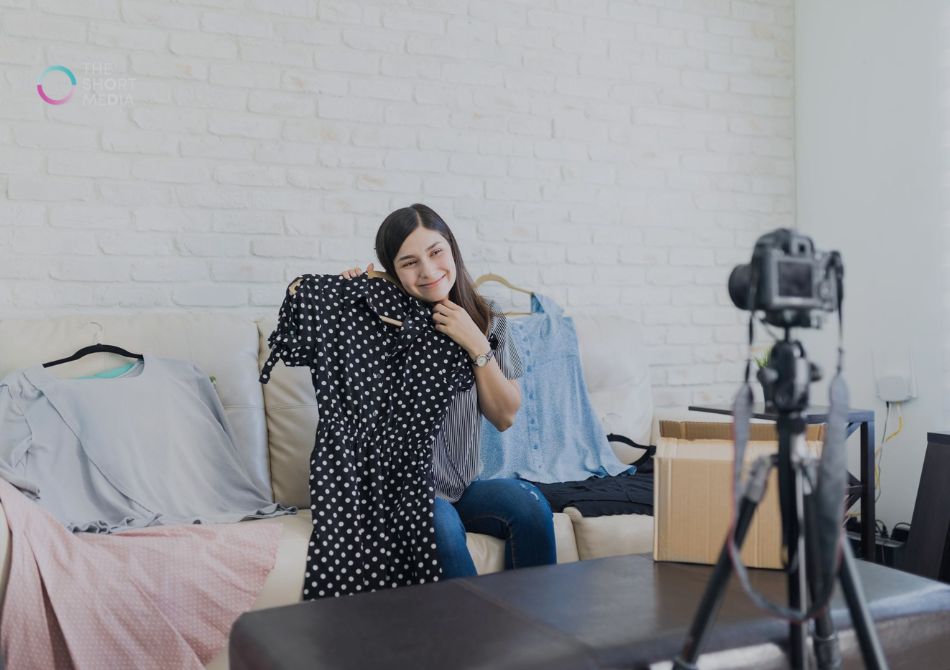
A few months ago, I was watching a beauty brand’s TikTok LIVE on a Tuesday night. Nothing fancy. A creator was standing in her bathroom, bad overhead lighting, stack of products on the counter, answering comments as they came in. Somebody asked whether the serum pilled under sunscreen. Another wanted to know if it worked on oily skin in Florida humidity. She tested it right there, on camera, while talking.
That LIVE sold more than the brand’s polished launch video from the week before.
That’s the part a lot of teams still miss. They’re treating TikTok LIVE like a bonus content format, when it’s starting to look a lot more like the modern version of QVC — only faster, messier, and way more responsive. Not “premium” in the old sense. But often better at moving product.
For brands in the USA, especially in beauty, food, fitness, home, and impulse-friendly DTC, this shift matters. A lot.
TikTok LIVE didn’t copy home shopping — it fixed some of its problems
Traditional home shopping worked because it combined demo, urgency, and personality. Someone showed you the product, explained why it mattered, repeated the offer, and handled objections in real time.
TikTok LIVE does that too, but without the stiff, overproduced feel that turns younger shoppers off.
The format is looser. A host can pivot the second the comments change direction. If viewers keep asking whether a pan is really nonstick, the host can crack an egg and show it. If a protein powder tastes chalky, people will say so in the comments, and you’d better address it. That’s useful. Sometimes painfully useful.
I’ve seen comments in LIVE sessions reveal issues the product page completely ignored. Shade confusion. Sizing concerns. Shipping anxiety. Whether a candle is strong enough for a large open-plan room. Those are sales objections, but they rarely show up neatly in a brand brief.
That’s why TikTok LIVE marketing works differently from standard paid social. You’re not just pushing a message. You’re watching the audience rewrite the script in real time.
Why brands are taking TikTok LIVE for Brands more seriously now
A year or two ago, some teams treated LIVE like an experiment they could hand off to social interns or creators with a ring light. Now it’s getting budget conversations.
Part of that is platform behavior. People are already comfortable buying after seeing a quick demo, especially for products that benefit from a visual proof point. Think heatless curlers, stain removers, posture correctors, kitchen organizers, pet hair tools, lip stains, meal prep gadgets. You don’t need a 90-second ad if someone can use the thing live and answer “does it actually work?” on the spot.
Part of it is economic. Customer acquisition isn’t exactly getting cheaper. Brands are tired of paying for traffic that bounces because the landing page still has unanswered questions. TikTok LIVE for Brands gives you a chance to close some of that gap before the click even happens.
And honestly, some of the best-performing LIVE content doesn’t look expensive. A product demo filmed in a kitchen often beats studio content for food brands. I’ve watched a founder cut open frozen breakfast sandwiches on a live stream and outsell a sleek campaign edit that probably took three rounds of approvals.
Not always. But often enough that it changes how you plan.
What a TikTok LIVE shopping agency actually helps with
There’s a reason more brands are looking for a TikTok LIVE shopping agency instead of trying to build the whole thing in-house from scratch.
LIVE selling sounds simple until you’re in it. Then suddenly you need hosts, moderation, offers, inventory coordination, product sequencing, comment handling, creator training, technical setup, and a plan for what happens when the host starts reading a script too perfectly and the audience drops off.
A good TikTok LIVE shopping agency usually steps in where internal teams get stretched. Not just creative, but operations too.
That can include:
– finding creators who can actually sell live, not just post pretty content
– building run-of-show documents that don’t sound robotic
– mapping products to likely objections and FAQs
– coordinating flash offers without breaking fulfillment
– clipping LIVE moments into paid and organic assets afterward
That last piece gets overlooked. Some of the strongest TikTok LIVE marketing assets come after the stream ends. A host answering one honest question about whether a shapewear piece rolls down at the waist can become a much better conversion asset than the original ad concept.
The brands that fit this format best
Not every product belongs on LIVE. Some categories need more education, more regulation, or a different buying environment.
But there are clear winners.
Beauty is obvious. Foundation matching, texture tests, wear checks, side-by-side comparisons — all of that plays well in LIVE. Same for hair tools and skincare bundles.
Food can work surprisingly well too, especially in the US market where snack brands, supplements, sauces, and frozen products already live or die on taste cues and convenience. If the host can make it feel real instead of overrehearsed, people stick around.
Fitness products do well when the host actually uses them. Not “fitness lifestyle content.” Actual use. Resistance bands, massage guns, recovery tools, hydration products, posture gear. Viewers can tell when someone has never touched the item before going live.
Home products are another strong fit. Cleaning tools, storage items, bedding, kitchen gadgets, pet accessories. The old infomercial instincts still work here, just with comments flying by and less patience for fake enthusiasm.
And then there’s Amazon-focused brands. A lot of them are quietly figuring out that TikTok LIVE for Brands can warm up demand before shoppers end up on Amazon anyway. Even if the final purchase doesn’t happen inside TikTok, the stream can do the heavy lifting.
TikTok LIVE marketing is less about polish, more about pace
This is where some brand teams get uncomfortable.
They want every line approved. Every claim tightened. Every host trained to stay “on message.” Fair enough. But if the stream feels too controlled, the audience feels it immediately. You can almost watch retention slip.
I’ve seen brands join a trend two weeks too late and then wonder why the LIVE felt dead. I’ve seen a creator nail every talking point and still underperform because she sounded like she was reciting legal copy. On the flip side, a slightly chaotic host with real product familiarity can keep people watching for 20 minutes.
That doesn’t mean wing it. It means structure the stream around real interaction.
Good TikTok LIVE marketing usually has a few things baked in:
– a host who can demo and talk at the same time
– a clear offer cadence without sounding desperate
– moderators feeding the host useful questions
– product order that builds momentum
– enough flexibility to follow the comments when they go somewhere interesting
That’s also why TikTok LIVE for Brands tends to work best when social, creator, and commerce teams are actually talking to each other. If the paid team wants a conversion hook, the creator team knows which host can carry it, and the commerce team has inventory lined up, the stream has a shot. If those teams are all operating in separate tabs, it gets messy fast.
The new version of trust looks a little scrappier
A lot of executives still think trust comes from polish. Sometimes it does. But on LIVE, trust often comes from friction.
A host says, “Hang on, let me show you.” She opens the package badly. Spills a little powder on the counter. Reads a comment about shipping delays and addresses it instead of ignoring it. That kind of thing.
For TikTok LIVE for Brands, the selling moment is often buried inside those unscripted bits. Not the headline claim. The proof.
That’s a big reason a TikTok LIVE shopping agency can be useful. The right team knows how to preserve that rough-edged credibility without letting the stream drift into chaos. There’s an art to making it feel natural while still hitting sales goals. Slightly annoying answer, I know, but true.
What brands should do before going all in
Don’t start with a huge production calendar and six hosts. Start smaller and pay attention.
Pick a product that benefits from live demo. Build a tight offer. Choose a host who can handle comments without freezing. Then review the stream like a performance marketer, not just a social team.
Where did viewers drop?
What objections kept repeating?
Which product moments got clipped and shared?
Did the audience respond better to bundles, price drops, or simple demos?
That’s the stuff that turns TikTok LIVE marketing from “we tried LIVE” into an actual sales channel.
And if your internal team doesn’t have the bandwidth, a TikTok LIVE shopping agency can speed up the learning curve. Not because agencies magically fix everything. They don’t. But the good ones have already seen what happens when a host talks too long before showing the product, when the pinned offer is confusing, or when comments start asking questions the landing page should’ve answered weeks ago.
TikTok LIVE isn’t replacing every part of ecommerce. It’s just becoming a very specific kind of storefront — one where the pitch, the demo, the objections, and the sale all happen in the same messy room.
That’s closer to home shopping than most brands want to admit. It’s also why it’s working.
FAQs
1. Is TikTok LIVE only useful for big consumer brands?
Not really. Smaller DTC brands can do well if the product is demonstrable and the host is credible. I’ve seen niche home products and supplement brands get traction without massive followings, mostly because the stream answered practical questions people already had.
2. Do you need creators, or can founders host the LIVE themselves?
Founders can work great, especially for food, beauty, or problem-solving products. The catch is they need to be watchable live, not just knowledgeable. Some founders explain too much and forget to actually show the product.
3. How often should a brand go live?
Once a week is a reasonable place to start. Enough to learn patterns without burning out your team or repeating the same script. If something starts converting, then you can increase frequency.
4. What makes a bad TikTok LIVE?
Usually it’s one of two things: too scripted or too slow. If a host spends five minutes introducing the brand before touching the product, people leave. If they sound like they memorized every line, comments get quiet fast.
5. Should brands hire a TikTok LIVE shopping agency right away?
Depends on internal resources. If your team already understands creator management, offers, moderation, and ecommerce operations, you may not need outside help immediately. If LIVE is turning into a real revenue channel, agency support can save a lot of trial and error.
6. Is TikTok LIVE for Brands mostly about discounts?
Discounts help, but they’re not the whole story. A useful demo, a strong host, and clear answers to objections can do more than a generic 10% off code. Sometimes the offer that works best is a bundle or limited add-on, not a price cut.
7. Can local businesses in the USA use this too?
They can, especially in categories like med spas, salons, boutiques, fitness studios, or specialty food shops. It works better when there’s a product angle or a clear booking hook, not just “come visit us.”
8. How do you measure whether TikTok LIVE marketing is working?
Start with sales, obviously, but don’t stop there. Watch retention, comment volume, click behavior, product-level interest, and which objections keep surfacing. A stream that doesn’t crush revenue on day one can still hand you better messaging than three ad brainstorms.
9. Does polished production help at all?
Sometimes, sure. Good lighting and clean audio matter. But there’s a point where extra polish makes the stream feel less believable, especially for categories where people want proof more than branding. A kitchen counter and decent host can go a long way.