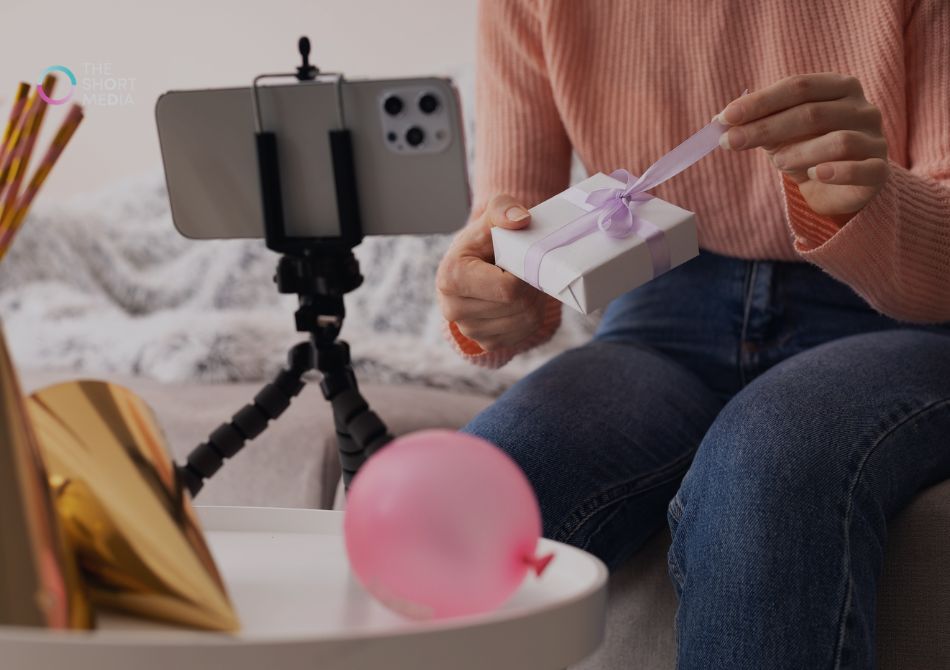
I’ve watched brands spend three weeks polishing a TikTok, adding motion graphics, cleaning up the lighting, getting legal to approve every line… and then a scrappy product demo filmed on someone’s kitchen counter beats it by 10x.
That’s not because TikTok “prefers low-quality content.” It doesn’t. It’s just that the app is very good at spotting what keeps people watching, rewatching, commenting, and sending videos to a friend with a little “lol this is you.” And polished brand content often forgets that part.
If you’re trying to build a real TikTok content strategy, it helps to stop thinking about the recommendation engine like a mystery box. It’s not random. It’s just less interested in what your brand wants to say than in how people react, frame by frame.
A TikTok content strategy starts with watch behavior, not branding
Most teams still begin with campaign messaging. That makes sense internally. You have a launch, a promo window, a product claim to land. But TikTok’s system doesn’t really care that your Q3 priority is a new protein bar flavor or a retail expansion at Target.
It cares whether people stick around.
That sounds obvious, but in practice it changes everything. A good TikTok content strategy starts with the first second, not the brand story. If the opening feels slow, too explained, or too obviously scripted, performance usually drops fast. You can almost feel it when a creator reads a brief too perfectly. The pauses are too clean. The wording is too approved. The video starts sounding like an ad before the viewer has decided they want one.
I’ve seen this with beauty brands in the U.S. constantly. A founder talking straight to camera about why a serum matters will often lose to a creator showing her actual skin texture in bathroom lighting and saying, “I thought this would irritate me, but it didn’t.” Not because one is more “authentic” in some abstract sense. Because one gets to the point faster and gives the viewer something to inspect.
That’s the first thing the engine seems to reward: content that creates immediate viewing intent.
The platform is still obsessed with completion rate, but not in a simplistic way
People love to reduce TikTok performance to retention graphs. Fair enough, those matter. But it’s not just about making every video shorter and hoping for a 90% completion rate.
A 12-second video with no payoff can die quietly. A 38-second video with a strong setup and a satisfying reveal can keep moving for days.
What tends to work in a practical TikTok marketing strategy is matching the length to the promise. If the hook suggests a transformation, a test, a comparison, or a story with tension, viewers will give you more time. If the video opens with vague throat-clearing, they won’t.
For example, a home cleaning brand might post:
– “Here’s our new mop system and why we made it…”
That usually feels dead on arrival.
But:
– “I didn’t realize how dirty this grout was until I tried this on one tile.”
Different story. There’s a visual payoff coming, and the viewer knows what they’re waiting for.
A smart TikTok marketing strategy pays attention to these micro-promises. Not clickbait. Just clarity.
What the recommendation engine seems to reward most: response, not reach
A lot of marketers still judge TikTok content the way they judge Meta creative. Did it hit enough people? Was the CPM efficient? Did we get enough thumb-stopping?
TikTok behaves differently. Reach is often the result, not the signal.
The videos that keep getting distributed usually produce some kind of response loop. Comments. Saves. Rewatches. Shares into DMs. Search behavior after viewing. Even negative comments can help if the content is interesting enough to hold attention. I’ve seen comments reveal objections the sales page completely missed, which then turned into the next five videos.
That’s why a decent TikTok marketing strategy shouldn’t separate content from community management. If people are asking, “Does this work on sensitive skin?” or “Would this fit in a small apartment laundry closet?” that’s not just engagement. That’s your next creative brief.
A lot of brands miss this because they’re still posting like TikTok is a distribution channel instead of a feedback machine.
Trend participation helps, but late trend-chasing usually looks painful
We’ve all seen it. A brand joins a trend two weeks too late, keeps the original audio, and wedges in a product shot that clearly wasn’t part of the joke. The comments get awkward fast.
TikTok’s recommendation engine doesn’t reward trends just because they’re trends. It rewards content that feels native to current behavior on the app. There’s a difference.
Sometimes that means using a trend format. Sometimes it means borrowing the pacing, editing style, or confession-style framing without touching the trend itself. A good TikTok content strategy knows when to skip the obvious trend and make something that simply feels current.
For a local med spa in Dallas or a fitness studio in Chicago, that might mean staff reaction videos, quick myth-busting clips, or “what clients always ask before booking” content. Not every business needs to dance around a trending sound. Honestly, most shouldn’t.
This is where a strong TikTok content agency can be useful, assuming they actually understand platform behavior and aren’t just repackaging Instagram Reels ideas. A lot of agencies say they do TikTok, but you can tell when the content was designed by someone who’s never sat in comments or reviewed retention dips at the three-second mark.
Search intent matters more than some creative teams want to admit
TikTok isn’t just an entertainment feed anymore. Plenty of users treat it like a messy search engine. They look up product reviews, “Amazon finds,” meal ideas, gym form tips, before-and-after proof, even local service recommendations.
That changes what gets rewarded.
A TikTok marketing strategy that only focuses on viral concepts misses the quieter, steadier traffic that comes from searchable content. A food brand can do well with “easy high-protein lunch” framing. A skincare line can build around “best moisturizer under makeup” or “how to layer retinol and barrier cream.” A home brand can post “small apartment storage ideas” with the product naturally in use.
This is also where a TikTok content agency can either help a lot or make a mess. The good ones know how to build a mix: some content aimed at broad discovery, some aimed at search behavior, some aimed at conversion objections. The bad ones chase only viral formats and then act surprised when the traffic doesn’t convert.
The engine likes specificity. Generic brand speak gets filtered out by humans first
People don’t swipe because a brand used the wrong keyword density. They swipe because the video feels interchangeable.
Specificity tends to outperform polished vagueness. A DTC supplement brand saying “supports wellness” gives viewers nothing. A creator saying, “I kept this in my car because I always forgot my afternoon dose,” weirdly enough, gives the content texture. It feels lived-in.
Same thing with retail launches. “Now available nationwide” is easy to ignore. “I found this at Ulta and didn’t expect shade 4 to actually match me” has a shot.
If you’re building a TikTok content strategy, this is where real-world usage matters more than formal messaging. Show the weird angle. Show the messy cabinet. Show the Amazon package on the porch. A product demo filmed in a kitchen often outperforms studio content because the setting answers silent questions: Is this easy to use? Is it bulky? Does it feel like normal life?
A seasoned TikTok content agency will usually push a brand to make more of that kind of content, even if the internal team is nervous it looks too casual.
Paid and organic still work better together, but only when the creative is built honestly
I know, every paid social person says they want “organic-looking” ads. Half the time what they mean is a creator reading a sales script with bad lighting. That’s not the same thing.
TikTok’s engine seems to reward creative that was made with platform behavior in mind first. Then it can be repurposed into Spark Ads or whitelisted creator ads if it earns the right to scale.
A practical TikTok marketing strategy usually includes testing organic concepts before putting media behind them. Not because every winning ad starts organic, but because organic comments and retention data can tell you where the friction is. Maybe viewers love the first five seconds but drop when the product explanation starts. Maybe everyone asks about price. Maybe the joke works but the CTA kills momentum.
That’s useful. More useful than another internal opinion round, anyway.
A solid TikTok content agency should be able to bridge this gap between organic learning and paid execution. If they treat those as separate worlds, the creative tends to get stiff.
So what actually gets rewarded right now?
Not “authenticity” in the vague brand-deck sense. More like this:
Content that earns attention quickly
Not with chaos. With a clear reason to stay.
Videos that make a specific promise
A test, reveal, opinion, comparison, tutorial, reaction. Something concrete.
Native pacing
Not every cut needs to be hyper-fast, but dead air and over-explaining usually hurt.
Real audience signals
Comments, rewatches, shares, saves, searches. Not just passive views.
Useful specificity
Actual use cases, objections, environments, little details from real life.
Format fluency
The content feels like it belongs on TikTok, even when it’s selling something.
That’s the shape of a workable TikTok content strategy now. Less “how do we go viral,” more “what would make someone stay, react, and care enough to send this to one person.”
Not glamorous. But that’s usually where the good stuff starts.
FAQs
1. How often should a brand post on TikTok?
Enough to learn, not so much that the team starts posting filler. For most brands, 3 to 5 times a week is plenty if the concepts are distinct and you’re actually reviewing what happened.
2. Do follower counts matter much on TikTok anymore?
Less than most executives think. I’ve seen small accounts outperform bigger ones because the video itself was stronger. Distribution still happens at the content level first.
3. Should every TikTok video include a product?
No. Some of the best-performing videos warm up interest without forcing the item into frame. A fitness brand might post form mistakes, recovery routines, or gym bag habits and still build demand.
4. Is it better to use trends or original concepts?
Usually a mix, but forced trend participation can look rough. If the trend doesn’t fit the product naturally, skip it and use the pacing or framing style instead.
5. When does it make sense to hire a TikTok content agency?
Usually when the internal team is too slow, too polished, or too removed from the platform. If approvals take 12 days and every script sounds like legal wrote it, outside help can speed things up.
6. Can TikTok work for local businesses in the USA?
It can, especially for restaurants, med spas, realtors, salons, gyms, and home services. Local comments often become the signal: pricing questions, neighborhood references, booking concerns, that sort of thing.
7. What’s the biggest mistake brands make with TikTok creative?
Overwriting. You can spot it immediately when a creator sounds like they memorized a brochure. That kind of content rarely gets the first three seconds right.
8. Do polished videos always underperform?
Not always. Polished can work if the idea is sharp and the pacing is right. The problem is when polish slows the video down or makes it feel too controlled.