

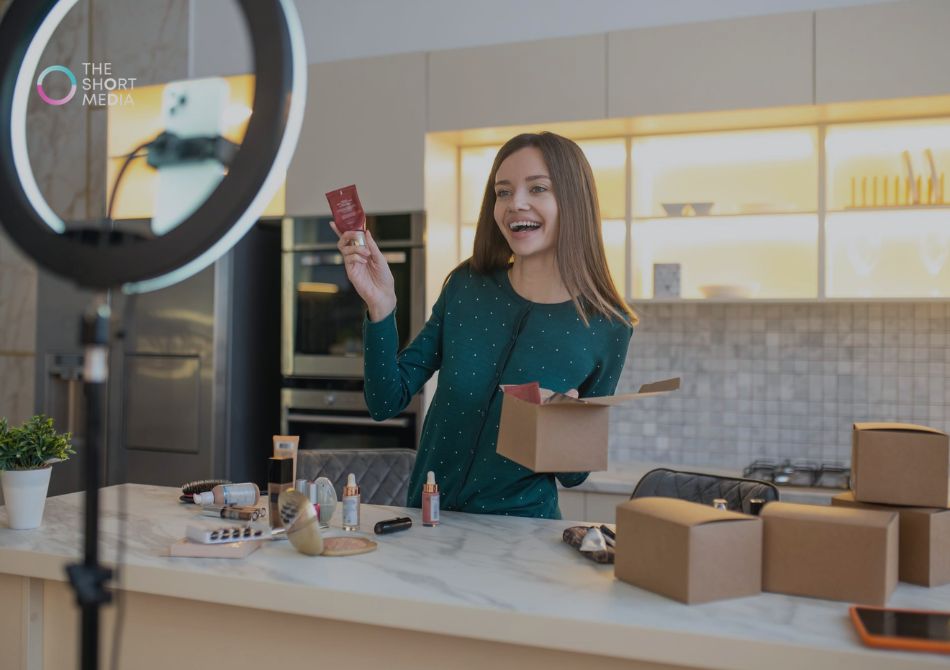
I’ve watched more than one retail team panic after posting what looked like a perfectly decent TikTok. Clean lighting, decent hook, product front and center. Then it flopped. A week later, a creator films the same product on a cluttered kitchen counter, says one slightly awkward but believable line about why she actually uses it, and that version starts moving units.
That’s usually the moment retailers stop treating TikTok like just another media channel and start paying attention to how commerce actually works there.
A lot of brands come into TikTok wanting reach. Fair enough. But if you’re selling something—beauty, snacks, supplements, home gadgets, even seasonal retail drops in big-box stores—reach without conversion is just expensive noise. That’s where tiktok shop services start to matter. Not in a vague “full funnel” way. In a very practical, sales-focused way.
Why retailers get stuck on TikTok
Most retail brands already know how to run Meta, search, Amazon ads, maybe some influencer seeding. TikTok looks familiar from a distance, but the mechanics are different enough to trip people up.
The biggest mistake? Treating content and commerce as separate workstreams.
On TikTok, the video, the comment section, the creator’s delivery, the product page, the offer, and the checkout flow all affect conversion at once. If one part feels off, people bail. I’ve seen a skincare brand spend heavily on traffic while the top comments kept asking, “Wait, is this for oily skin or dry skin?” Their landing page answered it. Their video didn’t. Sales lagged until they fixed the creative.
Retailers also tend to arrive late to trends. Not because their teams are bad, usually because approvals take too long. By the time legal signs off, the sound peaked 12 days ago and now the content feels like a dad wearing a high school hoodie. That hurts more on TikTok than on other channels.
What tiktok shop services actually do
At their best, tiktok shop services connect a few things retailers often manage in silos: creator sourcing, shop setup, product listing optimization, affiliate coordination, short-form creative strategy, live selling support, and paid amplification.
That sounds tidy written out like that. In reality, it’s messy. Which is why it helps to have somebody handling the operational side.
A strong setup usually includes:
– Product listings that don’t read like Amazon leftovers
– Creator content built for purchase intent, not just views
– Affiliate outreach with people who can actually sell, not just pose with packaging
– Offer testing that matches the product category
– Shop backend management so inventory, fulfillment, and promos don’t become a weekly fire drill
For retailers, especially in the USA, this matters because TikTok buyers are quick to react and just as quick to move on. If your beauty launch is out of stock after a creator spike, or your home product listing has weak images, you don’t just lose one sale. You lose momentum.
The conversion lift usually comes from boring details
This is the part people skip because it isn’t glamorous.
Retailers often assume conversion problems come from the ad. Sometimes they do. But a lot of the time, it’s smaller stuff. A product title that sounds too generic. A thumbnail that doesn’t show scale. A promo that’s technically live but buried. A creator reading a script too perfectly, so the whole thing feels rehearsed.
I’ve seen promoting products on tiktok work especially well when brands stop trying to over-control the message. Not abandon brand safety, obviously. Just loosen the grip enough that creators can sound like people.
A Midwest food brand I worked around had much better results when creators filmed in their own kitchens instead of using polished branded footage. The comments shifted from “ad” to “where did you buy this?” That’s not magic. It’s just context. The product looked like something someone actually cooked with on a Tuesday night.
When creator content sells better than brand content
Retail teams sometimes resist this at first. They’ve invested in studio assets, campaign messaging, retail packaging callouts. Then a creator in Texas posts a casual demo and outperforms the polished version by 3x on click-through and conversion.
That happens because promoting products on tiktok is often less about perfect branding and more about believable use. People want to see how the thing fits into real life.
For fitness products, that might mean a resistance band shown in a cramped apartment, not a luxury gym. For home cleaning products, a stained sink works better than a spotless set. For beauty, texture shots in bathroom lighting can beat campaign footage. Not always. But often enough that retailers should stop assuming “more produced” means “more persuasive.”
TikTok promotion services work best when they’re tied to the shop
A lot of brands still split their TikTok efforts into two buckets: organic creator work over here, paid media over there. That division causes problems.
The strongest tiktok promotion services are built around what’s already converting inside the shop. Instead of forcing paid ads to carry weak creative, smart teams watch for signs of actual buying behavior. Saves, comments with intent, affiliate traction, repeat hooks, even the way people phrase objections.
Comments are wildly useful, by the way. Sometimes they reveal the exact thing your PDP forgot to explain. “Does this fit under an apartment sink?” “Will this work on textured hair?” “Is this sweet or spicy?” Retailers ignore that stuff at their own expense.
Good tiktok promotion services don’t just boost posts. They help identify what deserves scale, then adapt it without sanding off the personality that made it work in the first place.
Paid support still matters. Just not in the old way.
There’s still a place for media buying, Spark Ads, retargeting, creator whitelisting, and launch support. Especially for retail moments like seasonal pushes, Amazon tie-ins, or getting velocity around a Target or Walmart rollout.
But tiktok promotion services that perform well usually start with native proof. A creator clip with real watch time. A product demo with strong comments. A live session that moved inventory. Then paid spend comes in to extend something that already has a pulse.
That’s different from building a campaign in a conference room and hoping TikTok users accept it.
Promoting products on TikTok without making it feel like a commercial
This is where a lot of retailers overcorrect. They hear “authenticity” and suddenly everything gets loose, under-explained, or off-brand. That’s not the answer either.
Promoting products on tiktok still needs structure. Usually just lighter structure.
You need a clear product angle. You need a reason to buy now. You need creators who understand the category. A person who’s great at selling lip oil may be terrible at explaining a countertop ice maker. Different instincts.
For retailers, I’d focus on these practical conversion drivers:
Product-market fit has to show up in the first five seconds
Not in a mission statement. In the use case.
If you’re selling lunch containers, show the leak test. If it’s a self-tanner, show the shade result. If it’s a pet hair remover, show the couch. Promoting products on tiktok works better when the proof arrives before the branding.
Offers need to feel native to the platform
Bundles, limited-time discounts, creator-specific promos, free shipping thresholds—these all help, but they need to be visible in the content and the shop listing.
Retailers sometimes bury the offer in the caption and wonder why conversion stalls. Most people aren’t doing homework. They’re scrolling.
Shop pages can’t feel like an afterthought
This is where tiktok shop services really earn their keep. The listing has to support the content, not contradict it. If the creator says “great for sensitive skin” and the product page is vague, trust drops fast.
Strong tiktok shop services tighten that gap. Better titles. Better images. Better promo setup. Better creator-product matching. Not glamorous, but it moves revenue.
Retail examples where this tends to work
In beauty, tiktok promotion services often perform best when the content shows application, wear test, and shade context. Not just a pretty close-up.
In food and beverage, promoting products on tiktok usually improves when creators show preparation or taste reaction in a real home setting. A frozen snack filmed in an actual family kitchen can do more than a branded recipe edit.
For home products, utility wins. Show the drawer organizer solving the messy junk drawer. Show the mop reaching under the couch. Retailers selling through TikTok Shop or trying to support Amazon sales both benefit when the product earns its credibility on screen.
Even local service-adjacent brands—think med spas, home cleaning franchises, boutique fitness studios selling retail kits—can use tiktok promotion services to turn attention into bookings or product add-ons. But they still need clear proof and a simple path to action.
Where retailers usually waste money
Usually on one of three things:
First, hiring creators based only on follower count. I’d take a smaller creator who knows how to demonstrate a product over a lifestyle account with vague engagement any day.
Second, forcing scripts. You can almost hear when someone got a Google Doc with approved phrases. The pacing gets weird. The comments get colder.
Third, scaling too early. A video with decent views isn’t enough. Watch for signs that people actually want the item. Clicks, saves, product page engagement, affiliate sales, comment quality. That’s where tiktok shop services and tiktok promotion services can give retailers a more grounded read on what’s worth pushing.
FAQs
1. Do retailers need TikTok Shop to sell successfully on TikTok?
Not always. Some brands still do well driving traffic to Amazon, Shopify, or retail partners. But if you want shorter paths to purchase and cleaner in-platform conversion signals, TikTok Shop helps a lot.
2. How long does it take to see results from tiktok shop services?
It depends on the category and how messy the setup is when you start. I’ve seen early traction in a few weeks when the product already had creator fit, and I’ve also seen brands spend two months just fixing listings, offers, and fulfillment issues before things stabilized.
3. Are tiktok promotion services mainly for paid ads?
That’s too narrow. Good tiktok promotion services usually cover creator amplification, Spark Ads, content testing, offer support, and figuring out which posts are actually worth putting money behind.
4. What kinds of products convert best on TikTok Shop?
Products with an obvious demo tend to have an easier time. Beauty, kitchen tools, cleaning products, snacks, gadgets, hair care, fitness accessories. If someone can understand the benefit quickly, you’ve got a shot.
5. Is promoting products on tiktok expensive for smaller retailers?
It can get expensive if you copy what larger brands do without adjusting. Smaller retailers usually do better starting with a tighter creator group, simpler offers, and a handful of product angles instead of trying to flood the platform.
6. How many creators should a retailer work with at once?
More isn’t automatically better. Start with enough creators to test different styles and audiences, but not so many that your team can’t review what’s actually working. For a lot of retailers, 10 to 20 solid creators is more useful than 50 random ones.
7. Can TikTok Shop help with retail launches in stores like Target or Walmart?
Yes, especially when the content gives people a reason to care before they see the shelf. A creator saying “I found this at Target” can help, but showing why it’s worth grabbing does more for sell-through.
8. What’s the biggest mistake brands make when promoting products on tiktok?
Trying to make every post sound approved by six departments. It usually ends up stiff, late, and weirdly generic. TikTok users can smell that in about two seconds.