
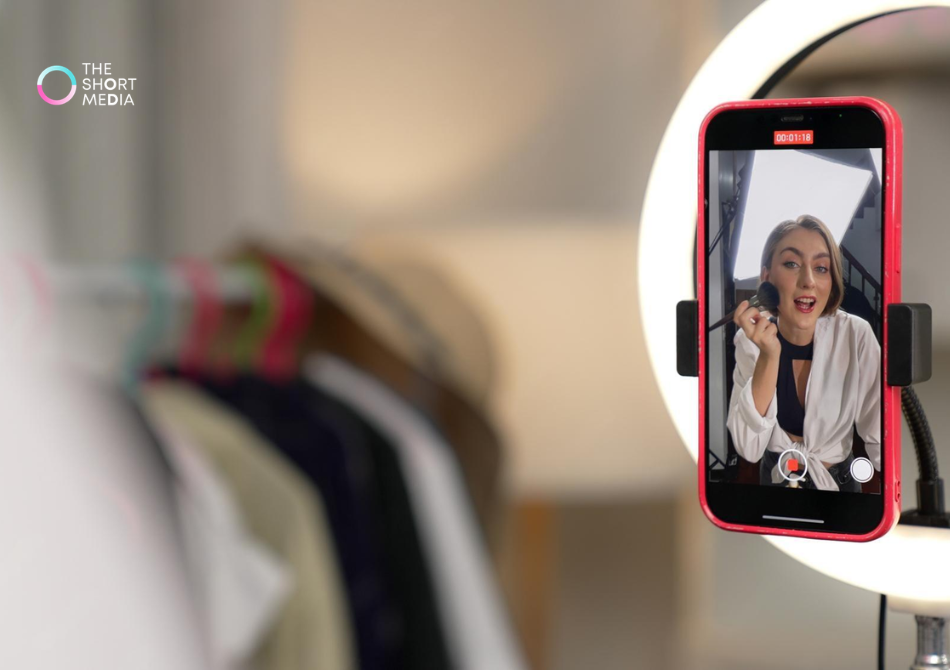
A few months back, I was looking at a UK skincare brand’s TikTok account after they’d spent a decent chunk of budget on polished launch videos. Nice lighting. Clean edits. Proper brand deck stuff. And yet the videos that actually moved product weren’t the expensive ones. It was a creator filming in her bathroom, pointing out how the cleanser sat next to her kettle because she’d run out of shelf space. Slightly chaotic. Very believable. Sales followed.
That’s usually where the conversation around tiktok promotion services gets real. Not at the strategy deck stage. Not when everyone’s nodding along to trend reports. It gets real when a brand has to decide what kind of promotion actually works in-feed, in comments, and inside TikTok Shop without looking like it was approved by six people in a boardroom.
If you’re selling into the UK market, that tension matters. UK audiences can be responsive on TikTok, but they’re also quick to scroll past anything that feels too rehearsed, too salesy, or just oddly late. I’ve seen brands jump on a sound nearly two weeks after it peaked and then wonder why the numbers looked dead on arrival. Happens all the time.
The UK market doesn’t reward the same TikTok habits as everyone assumes
A lot of brands still approach TikTok like it’s just another paid social placement with a younger audience. That’s usually the first mistake.
In the UK, especially for retail, beauty, food, home bits, and impulse-friendly products, performance often comes from a mix of creator-led content, smart media support, and a clear path to purchase through TikTok Shop. Not just “more content.” Better-fit content. Content that understands local tone, pricing sensitivity, humour, and how people actually talk in comments.
For example, a US snack brand can get away with big, loud energy and exaggerated reactions. In the UK, that same style can feel a bit forced unless the creator really knows how to carry it. I’ve seen food products perform far better with a deadpan creator doing a fridge raid than with a high-energy scripted taste test. Same product. Same week. Completely different response.
That’s why the strongest tiktok promotion services tend to be less about vanity metrics and more about matching the right format to the right commercial goal.
What good tiktok promotion services actually include
Some agencies sell TikTok like it’s one thing. It isn’t. Good tiktok promotion services usually combine a few moving parts:
Creator sourcing that doesn’t feel lazy
This is where a lot of campaigns either click or fall apart. If the creator looks like they’ve read the brief once, memorised the script, and delivered every line with perfect enthusiasm, the audience can smell it instantly. You’ll often see it in the comments first. Things like “ad” or “why are you talking like that” start appearing before the video has any chance to settle.
Strong creator sourcing means finding people who already make content in a style that fits the brand. For beauty, that might be a mid-tier UK creator who’s good at close-up demos and honest wear tests. For home products, maybe someone filming in an actual kitchen, not a spotless set that looks rented for the day. I’ve watched a mop demo shot next to a dog bowl outperform studio content by miles. Not glamorous, but there you go.
Paid support that amplifies what already has traction
A lot of teams waste money boosting the wrong asset. They pick the video they like internally rather than the one people are actually watching through.
The better agencies use paid support to scale creator content that has already shown signs of life. Strong hold rate. Comments with buying intent. Saves. Shares. Not just views. For UK campaigns, this matters even more when you’re trying to support a retail push, an Amazon listing, or a launch inside TikTok Shop.
And no, not every good video needs to be heavily produced. One fitness brand I worked with got stronger conversion from a creator filming a resistance band demo in a small London flat than from a polished gym shoot. The flat made the product feel usable. The gym made it feel like work.
Shop integration that isn’t bolted on afterwards
This is a big one. TikTok Shop works best when it’s part of the content plan from the start, not something added after the campaign has already been signed off.
If a service provider really understands TikTok Shop, they’ll think about offer structure, creator commission, live support, product anchoring, and what happens after the click. They’ll also know that comments often reveal the objections your product page missed. Shade match confusion for beauty. Portion size concerns for food. Delivery questions. “Does this work on textured hair?” Those little frictions matter.
I’ve seen brands spend ages refining ad copy while ignoring the fact that the top comment was asking whether the product was dishwasher-safe. That comment was doing more sales work than the ad.
Why TikTok Shop and tiktok influencer marketing now sit in the same conversation
A couple of years ago, some brands treated tiktok influencer marketing as awareness and TikTok Shop as conversion. Nice tidy split. Doesn’t really hold up now.
The strongest campaigns blur those lines. A creator introduces the product, demonstrates it in a believable setting, handles objections in comments, and gives people a direct route to buy. That’s not just top-of-funnel influence. That’s commerce content.
For UK brands, especially challenger brands and DTC operators, tiktok influencer marketing has become much more operational. Less “let’s send out product and hope.” More structured seeding, whitelisting, Spark Ads, affiliate partnerships, and creator testing at volume.
That doesn’t mean huge creator lists, by the way. Sometimes 10 well-matched creators beat 60 random ones. I’d take a smaller group with strong audience fit over a bloated gifting spreadsheet every time.
The services that tend to win in the UK
Not every promotional approach travels well across markets. The UK tends to respond better when the service model respects local nuance instead of importing a generic US playbook.
Creator-led product demos
Still one of the most reliable formats, especially for beauty, home, food, and problem-solution products. If you’re selling a stain remover, scalp serum, air fryer accessory, or posture corrector, people want to see the thing used properly. Preferably by someone who seems like they’d actually keep it after the brief ends.
This is where tiktok influencer marketing pulls real weight. Not celebrity-style endorsement. More practical recommendation. A creator showing what happened after three uses, or comparing your product to the one they bought at Boots last month.
Affiliate and commission-based creator programmes
For brands using TikTok Shop, affiliate programmes can work very well in the UK if they’re managed properly. The keyword there is managed. Left alone, these programmes can turn into a pile of low-effort content from creators who barely understand the product.
The better tiktok promotion services build proper creator onboarding, messaging guidance, offer timing, and content review without sanding off personality. They also know when to leave room for creators to say things in their own voice. If every video lands on the same phrase, performance usually drops.
Spark Ads and whitelisting
This is still one of the more useful ways to scale tiktok influencer marketing without making it feel like a separate ad campaign. If a creator video is already getting traction, Spark Ads can extend its life while keeping the native feel intact.
For UK ecommerce brands, this is especially useful around product drops, seasonal pushes, and retail launches. I’ve seen it work well for home organisation products in January, beauty kits before Christmas, and food bundles around bank holiday periods when people are already in a buying mood.
TikTok Shop lives and live selling support
Some brands avoid live selling because they think it’s messy or too QVC. Fair enough. Bad lives are rough to watch. But good ones can move stock.
The service side here matters a lot: host selection, offer pacing, moderation, stock planning, and making sure the person on camera can actually talk naturally for more than 90 seconds. You’d be surprised how often that last bit gets overlooked. TikTok Shop lives can work brilliantly for beauty, gadgets, home products, and even local retail events if they’re handled by someone who understands rhythm, not just product features.
Where brands usually get it wrong
Usually, it’s one of these:
They choose creators based on follower count instead of content quality.
They over-script.
They expect tiktok influencer marketing to fix a weak product page.
They treat TikTok Shop like a plug-in instead of a sales channel.
They panic after one underperforming post and change the whole strategy.
Also, and this is a smaller point but still real, some brands brief UK creators with language that sounds imported. “Obsessed,” “run don’t walk,” “you need this.” It can work in the right voice. But if it sounds copied from a US swipe file, the content gets stiff fast.
Picking the right partner for TikTok in the UK
If you’re hiring for tiktok promotion services, ask to see examples that go beyond pretty screenshots. You want to know what content converted, what got scaled, what failed, and what changed after the first round.
Ask how they handle TikTok Shop strategy. Ask how they source creators for UK audiences. Ask whether they’ve worked on affiliate-led campaigns, Spark Ads, and creator testing. Ask what they do when comments expose a product objection the landing page didn’t answer.
A decent provider should have opinions here. Not just packages.
Because the UK market isn’t short on TikTok activity. It’s short on campaigns that feel properly tuned for how people actually buy on the platform.
FAQ's
1. What are tiktok promotion services, really?
They’re usually a mix of creator sourcing, campaign management, paid amplification, content planning, and commerce support. Some agencies also handle affiliate recruitment and TikTok Shop operations, which is where things get more interesting.
2. Do UK brands need TikTok Shop to succeed on TikTok?
Not always. Plenty of brands still drive traffic to their own site or Amazon listing. But TikTok Shop can shorten the path to purchase, especially for impulse-friendly products like beauty tools, snacks, home gadgets, and lower-ticket wellness items.
3. Is tiktok influencer marketing still worth it if paid ads are already running?
Usually, yes. Paid media tends to work better when it has stronger creative to run with, and tiktok influencer marketing is often where that creative comes from. Also, creators can surface angles your in-house team wouldn’t think to test.
4. How many creators should a brand start with?
You don’t need 50 out of the gate. For a lot of brands, 8 to 15 is enough for an initial test, assuming the selection is good and the briefs aren’t strangling the content. Better to learn from a focused batch than drown in average videos.
5. What products tend to do well on TikTok Shop in the UK?
Beauty does well. Home organisation can do well. Food and drink can work if the content makes the product feel immediate and easy to try. Useful little products often outperform “aspirational” ones, honestly.