
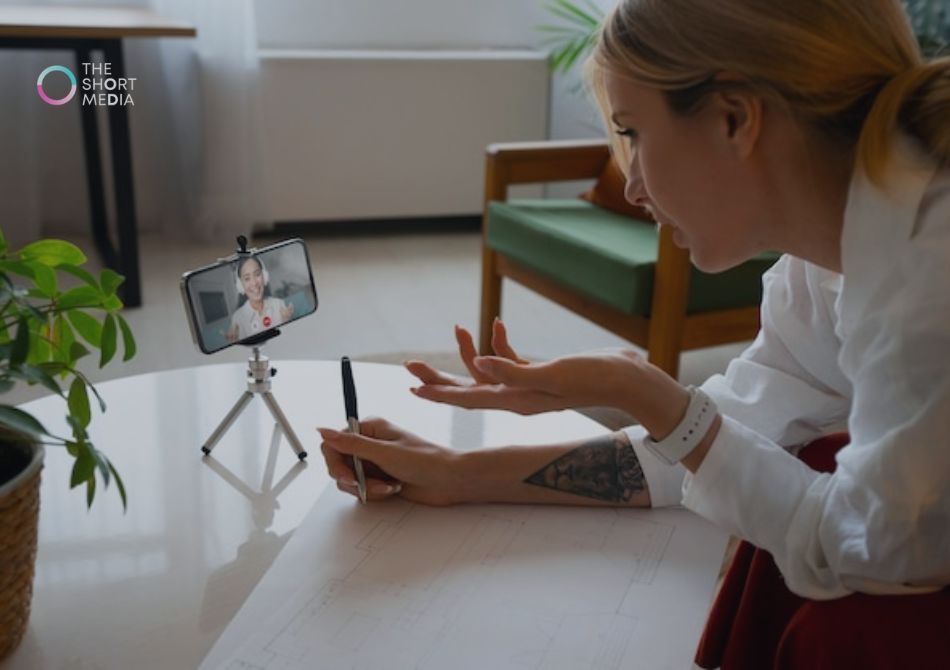
I’ve seen brands spend £8,000 on polished TikTok creative only to get beaten by a scrappy product demo filmed next to a kettle.
Not because the expensive version was “bad,” exactly. It just looked like an ad from the first second. The cheaper clip had a founder’s hand in frame, slightly awkward lighting, and a comment section full of people asking where to buy it. TikTok read that differently. So did viewers.
That’s usually where the confusion starts. A lot of teams still talk about TikTok’s algorithm as if it’s some moody black box that randomly blesses one video and buries the next. From what I’ve seen working with paid social teams, creators, and brands trying to make TikTok work beyond a one-off spike, it’s less mysterious than that. It’s just not grading content the way traditional brand marketers expect.
What a TikTok Agency learns pretty quickly
A good TikTok Agency stops obsessing over follower count very early on. TikTok isn’t really built like older social platforms where audience size did most of the heavy lifting. The app tests content in waves. It watches what happens. Then it decides whether to keep pushing.
That means “content quality” isn’t judged by whether a brand team thinks the video looks premium. It’s judged by behavioural signals.
Not abstract ones either. Very specific things:
- Did people watch past the first second or two?
- Did they rewatch?
- Did they stop scrolling?
- Did they comment something real, not just “love this”?
- Did they share it to a mate or save it for later?
- Did they click through to a profile, product page, or TikTok Shop listing?
Those are the signals that tend to matter because they show the content created a reaction, not just an impression.
I’ve watched beauty brands post beautifully lit tutorials that got weak watch time because the creator read the hook too perfectly, like she was auditioning for a TV advert. Then the same product showed up in a messy “I didn’t expect this to cover my redness” bathroom clip and suddenly watch-through doubled. Same product. Different behavioural response.
TikTok doesn't score “quality” like a brand manager does
This is where many internal teams get stuck. They’re often asking, “Does this look on-brand?” TikTok is asking, “Did people care enough to stay?”
That difference matters more than most marketers want to admit.
A TikTok Growth Agency usually ends up translating between those two worlds. The brand wants control, consistency, polished messaging. The platform tends to reward immediacy, clarity, and some level of native feel. Not fake “authenticity” by the way. People can smell that a mile off. Especially if a creator is clearly forcing a trend that passed two weeks ago.
TikTok seems to read quality through stacked engagement signals, but not all engagement is equal. A shallow like is nice. A rewatch or a save is usually more meaningful. A comment thread where people argue about whether the product actually works? Often even better than polite praise, because it signals attention.
That’s why experienced tiktok marketing partners spend so much time looking at retention graphs and comment quality, not just views.
The first three seconds do more than most teams think
People say “hook” so often it’s become a bit useless, but the opening still matters. A lot.
TikTok appears to test whether a video earns attention immediately. If viewers scroll away before the setup lands, the rest of the video barely gets a chance. That doesn’t mean every clip needs shouting, text overload, or fake controversy. It means the viewer needs to understand why they should care, fast.
For a US home product brand, that might be as simple as showing the stain before introducing the cleaning tool.
For a food brand, it could be the finished cheese pull first, then the recipe.
For local services, oddly enough, “before” footage often outperforms slick explainers. I’ve seen a pressure washing company get stronger retention from a grimy patio reveal than from a talking-head owner intro. Makes sense when you think about how people browse.
Good tiktok marketing partners know that the opening frame is often doing more work than the caption ever will.
Watch time matters, but context matters too
People love to reduce TikTok performance to watch time, and yes, it matters. But it’s not as simple as “longer watch time always wins.”
A 12-second product demo with 85% completion can be stronger than a 45-second explainer with decent average views but weak finish rate. On the other hand, a longer video that gets rewatches at key moments can still travel well, especially if it’s teaching something or showing a transformation.
A TikTok Agency looking at quality properly won’t just ask how long people watched. They’ll ask where they dropped.
That’s often where the useful stuff is. If viewers leave right before the product reveal, maybe the setup dragged. If they rewatch the middle section, maybe that’s the actual hook and should be moved to the front next time. Comments help here too. I’ve seen comments reveal objections the landing page completely missed: “Does this work on textured hair?” “Will this stain quartz?” “Can you use it if you’ve got pets?” That’s research, basically, handed to you for free.
The better tiktok marketing partners treat comment sections like a live focus group, not a vanity metric.
Shares, saves, and searches are stronger quality clues
Some of the best-performing TikToks don’t explode with likes. They quietly rack up saves and shares.
That happens a lot with practical content. Fitness form corrections. Pantry storage ideas. Amazon product demos. “I didn’t know I needed this” type home clips. People may not publicly engage much, but they send it to someone or bookmark it for later. TikTok seems to read that as useful content, which is often a quality marker.
Search behaviour matters too. If a video pushes people to search the product, brand name, or category after watching, that’s a strong sign the content created intent. A decent TikTok Growth Agency will often build content around searchable phrasing without making it stiff. Not “Top 5 reasons to buy…” nonsense. More like content that naturally matches how people actually look things up.
For example, a supplement brand might do better with “what this tastes like after 7 days of trying it” than a polished benefits list. Less tidy, more believable.
Why native creative usually beats polished campaigns
This is the part some teams still resist.
TikTok often rewards creative that feels like it belongs in-feed. Not low effort. Just native. There’s a difference. Native means the pacing, framing, voice, and editing feel familiar to the platform. It doesn’t jar people into ad-defence mode immediately.
A TikTok Agency that understands performance creative won’t automatically push for rough content, but they will usually argue against overproducing too early. I’ve seen retail launch campaigns where the studio hero video came in last, while a creator clip filmed in her kitchen, opening the package with one hand and dropping the lid halfway through, drove the best CPA. Slightly chaotic. Totally believable.
That’s also why strong tiktok marketing partners care so much about creator fit. A creator with the “right audience” can still flop if they sound unnatural with the script. Honestly, one of the easiest ways to kill performance is to over-script someone who usually sounds relaxed.
A TikTok Growth Agency looks for patterns, not one-hit luck
A single viral hit can teach you something. It can also teach you the wrong lesson.
Maybe the sound was peaking that week. Maybe the creator’s audience was unusually active. Maybe the product category was having a moment. If you’re serious about growth, you need repeated signals across multiple posts.
That’s where a TikTok Growth Agency earns its keep. Not by promising virality, but by spotting patterns across hooks, formats, creators, editing styles, and offers. Which intros keep retention above baseline? Which demos get saves? Which objections keep appearing in comments? Which paid ads hold up after the organic version performs?
The better tiktok marketing partners aren’t just posting more. They’re building a feedback loop.
And that loop usually includes paid social. Organic TikTok can tell you what earns attention. Paid can help you scale the formats that keep working. But if the organic signal is weak, media spend tends to expose that pretty quickly.
What content quality really means on TikTok
If I had to put it plainly, TikTok measures quality through response.
Not whether the lighting was expensive. Not whether the copy passed five rounds of stakeholder edits. Not whether the brand team called it “premium.”
Response. Did people stop, watch, react, share, search, save, click, comment, or rewatch?
That’s why a smart TikTok Agency usually cares less about making every post feel perfect and more about making each one legible, watchable, and worth responding to.
And it’s why the best tiktok marketing partners tend to sound a little annoying in meetings, if I’m honest. They keep asking for more creator freedom, faster iteration, looser scripts, uglier first cuts. Not because they hate brand standards. Because they’ve seen what happens when content is engineered for approval instead of attention.
FAQs
1. Does TikTok actually know if content is “good”?
Not in the way a human creative director does. It’s reading signals from viewer behaviour, so “good” usually means people stayed, watched, interacted, or came back to it.
2. Is watch time the most important ranking factor?
It’s a big one, but not the only one. A video with solid completion and no real engagement can still stall, while one with strong shares, comments, and rewatches may keep moving.
3. Why do low-budget videos sometimes beat polished ones?
Because polished isn’t always persuasive in-feed. If a clip feels too ad-like too quickly, people scroll. A simple demo filmed on a kitchen counter can feel more believable, especially for beauty, food, or home products.
4. Should brands copy trends to improve content quality?
Only if the trend still fits the product and the timing isn’t off. Joining a format late, with a stiff script, usually looks forced. You can feel it instantly.
5. Do comments really affect performance?
They can, especially when they’re specific. If people ask questions, tag friends, debate results, or share personal use cases, that signals stronger interest than generic praise.