

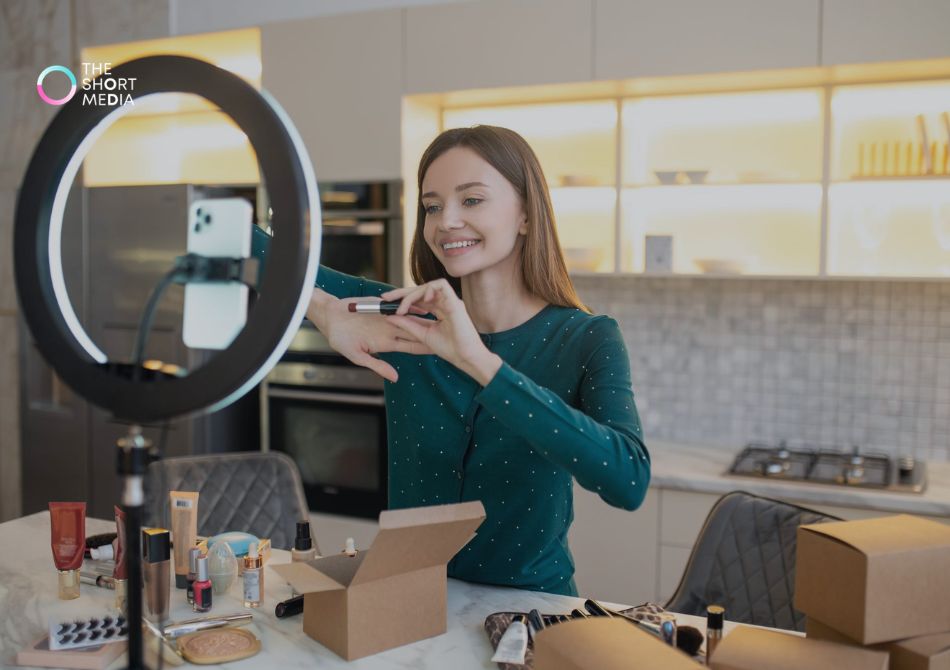
A couple years ago, a lot of US brands treated TikTok like the intern project. Post a few trend clips, send some product to creators, maybe boost a video if it accidentally did well. That was the vibe.
Now I keep seeing the opposite. A beauty founder in Miami wants TikTok content before she finalizes her Meta creative. A snack brand launching in Target asks for creator whitelisting plans before they even lock their retail display copy. A local med spa in Dallas is less interested in polished brand videos than in getting three believable “day in the life” clips shot by people who actually look like customers.
That shift didn’t happen because marketers suddenly got more adventurous. It happened because marketing on tiktok started answering questions other channels were getting worse at answering. What does the product look like in someone’s real house? Does it actually solve the annoying little problem it claims to solve? What are people skeptical about before they buy?
And when brands want that answered fast, they often end up talking to a tiktok marketing agency usa team before they brief anyone else.
The early budget is moving for a reason
A lot of media plans still pretend the funnel is neat. Awareness up top, conversion down below, creative adapted by channel, tidy reporting. Real life is messier. Someone sees a collagen powder mixed into coffee on TikTok, reads comments about taste, gets served a retargeting ad on Instagram, then buys on Amazon three days later because there’s a coupon.
US brands are putting TikTok earlier in the budget because it influences the whole chain, even when last-click reporting doesn’t give it much credit.
That’s especially true for products that need a little showing, not just telling. Think:
– a countertop ice maker for apartment renters
– a posture corrector that looks awkward until you see someone wear it under a hoodie
– a scalp serum that needs texture, routine, and before-and-after context
– a protein snack that sounds boring on paper but looks good in a lunch prep video
With marketing on tiktok, the product gets tried in public. Not in a focus group. In front of comments. That matters more than some brands want to admit.
I’ve seen comment sections surface objections a sales page completely missed. A home cleaning product had decent click-through but weak conversion until TikTok comments kept asking if it was safe around pets. Nobody had addressed it clearly. Once creators started casually showing the spray being used around dog beds and the brand added that language to PDPs, sales picked up. Not magic. Just useful feedback.
Why a TikTok-first approach looks more practical than experimental
There’s still a weird habit of talking about TikTok as if it’s mostly trends and dancing. That’s usually a sign someone hasn’t worked inside an account recently.
For a lot of brands, marketing on tiktok is becoming the fastest way to find out what message actually lands. Not the message the founder likes. Not the one legal made the safest. The one people stop for.
A script that reads too perfectly usually dies. You can feel it in the first two seconds. The creator sounds like they’re auditioning for a commercial, and viewers scroll. But a rougher clip filmed in a kitchen, with someone saying, “I thought this was gonna be gimmicky, but…” can outperform studio content by a mile. I’ve watched that happen with kitchen gadgets, skincare tools, even pretty boring storage products.
That’s one reason a tiktok marketing agency usa partner is getting pulled in earlier. Good teams aren’t just buying ads. They’re helping brands figure out what kind of proof the market needs.
Creative testing happens faster here
On other channels, brands often overwork creative before it ever ships. Too many approvals. Too much polishing. By the time it launches, the ad feels expensive and slightly dead.
With marketing on tiktok, a brand can test five hooks around the same product pain point in a week. Maybe for a fitness recovery tool it’s:
– “I bought this because my lower back was wrecked after long runs”
– “Physical therapy told me to do this at home”
– “This looked dumb until I tried it after leg day”
Those are very different entry points. And the comments will tell you which audience is actually leaning in.
That speed is a budgeting argument, not just a creative one.
It’s pulling double duty: research and acquisition
This is the part finance teams eventually notice. TikTok content can inform paid social, landing pages, Amazon listings, email angles, even retail sell-in decks.
A DTC haircare brand might start with marketing on tiktok to test whether customers care more about frizz control or wash-day time savings. Once one angle clearly wins in creator content, that language starts showing up everywhere else. Suddenly TikTok isn’t “another channel.” It’s where the messaging got sharpened.
That’s a big reason brands choose a tiktok marketing agency usa setup before they scale spend elsewhere. They want signal early, not just impressions.
Marketing on TikTok works well for products that need believable proof
Some categories fit especially well.
Beauty is obvious, but it’s not just beauty. Food brands do well when the product appears in an actual routine instead of a tabletop ad. A frozen high-protein breakfast sandwich looks very different in a glossy campaign than it does being unwrapped before a 7:30 a.m. commute. Guess which one feels more convincing.
Home products too. I’ve seen a mop demo filmed in a slightly messy kitchen beat a clean studio version because the mess looked normal. The studio ad said “brand.” The kitchen clip said “this is what happens after my kids eat blueberries.” Different energy.
For local services in the USA, marketing on tiktok can be surprisingly effective when the business stops trying to act national. Orthodontists, med spas, gyms, even HVAC companies can build traction with local faces and familiar neighborhood cues. The content doesn’t need to be viral. It needs to feel nearby.
And for Amazon brands, TikTok often acts like pre-conversion validation. People see the product used by a creator, then search it later. Not always through the ad click. Sometimes through Amazon search, which makes attribution a little annoying, honestly, but the lift is still there.
Why some brands still get it wrong
A lot of teams move budget into TikTok and then immediately force old habits onto it.
They over-script creators. They approve content two weeks too late, after the trend or sound is already tired. They insist every video mention the full brand story, three product features, a CTA, and a promo code. Then they wonder why it feels stiff.
This is where a tiktok marketing agency usa can save a brand from itself, assuming the agency actually understands creator behavior and not just ad dashboards.
The better setups usually do a few things well:
They cast for fit, not follower count
A creator with 18,000 followers who naturally talks about postpartum fitness, budget meal prep, or apartment storage can be far more useful than a bigger creator reading from a script they clearly didn’t write.
I’ve seen brands waste money on polished talent who looked right on paper and then underperform because the content felt rented.
They treat comments like strategy, not cleanup
Comments aren’t just moderation work. They’re where people tell you what they don’t understand, what they don’t trust, and what they wish the video had shown.
A pet supplement brand learned more from “will my picky dog even eat this?” than from half its internal planning docs. That question kept repeating, so the next round of creator briefs focused on picky eater reactions. Sales got better because the content got more honest.
They know paid and organic shouldn’t be separated too hard
The strongest marketing on tiktok programs usually let organic-style content lead, then use paid to scale what already feels native. Not every winning paid ad starts as an organic post, but when paid creative ignores how people actually watch TikTok, performance usually gets expensive fast.
Why this matters for US brands right now
Costs are up across paid channels. Consumers are more skeptical. Creative fatigue hits faster. Retail launches need social proof earlier. Founders want content that can travel across channels. All of that pushes TikTok closer to the front of the line.
Not because every brand needs to become a TikTok brand. That’s not realistic. Some categories will always convert better elsewhere.
But if you’re a US brand selling something visual, demonstrable, or even slightly impulse-friendly, TikTok often gives you the quickest read on what people care about and what they ignore. That’s why first dollars are moving there.
And if the internal team doesn’t have the creator network, editing cadence, paid testing process, or frankly the stomach for fast creative turnover, bringing in a tiktok marketing agency usa partner starts to make sense pretty quickly.
FAQ
1. Do small brands need a big budget to start on TikTok?
Not really. A lot of smaller brands do better starting with a tight creator test batch and a modest paid spend behind the strongest clips. Ten decent videos with clear product angles can teach you more than one expensive hero ad.
2. Is TikTok mostly for Gen Z in the USA?
That’s outdated at this point. Plenty of millennial shoppers are there, especially in beauty, home, food, parenting, wellness, and Amazon-driven categories. You can see it in who’s commenting and what they’re asking about.
3. How fast can a brand see results from marketing on tiktok?
Sometimes you’ll spot useful signals in the first couple of weeks, especially around hooks, objections, and creator fit. Revenue impact can take longer, depending on price point and whether people buy direct, through retail, or on Amazon.
4. What kind of products struggle on TikTok?
Products that are hard to demonstrate, hard to explain quickly, or heavily restricted can be tougher. Also, brands that insist on sounding like a corporate brochure usually have a rough time. That part is fixable, at least.
5. Should brands focus on organic content or paid ads first?
Usually both, but not in an overly structured way. Organic-style content helps you understand tone and proof points, while paid helps you scale the clips that already hold attention. If you skip the learning part and go straight to polished ads, you’ll probably feel it in CPMs and thumb-stop rates.
6. When does it make sense to hire a tiktok marketing agency usa partner?
Usually when the team is stretched, the creative volume is inconsistent, or nobody internally really knows how to brief creators without making the videos stiff. Also when paid social is spending money on TikTok but relying on recycled Meta creative. That’s a pretty common problem.
7. Can local service businesses really make TikTok work?
They can, if they stop trying to look like national brands. A dentist, gym, salon, or med spa can do well with staff faces, local references, quick transformations, and normal customer concerns. Fancy production often isn’t the thing that moves it.
8. Does marketing on tiktok help other channels too?
It usually does. Good TikTok creative can feed Meta ads, email copy, PDP updates, and Amazon listing improvements. Sometimes the biggest value isn’t the direct ROAS report. It’s finding the angle that finally makes the product click for people.
9. How many creators should a brand test at the start?
Enough to get variety, not so many that the team can’t review patterns. For many brands, 10 to 20 creators is a reasonable first wave. You want different faces, tones, and use cases. Not 40 versions of the same script.