
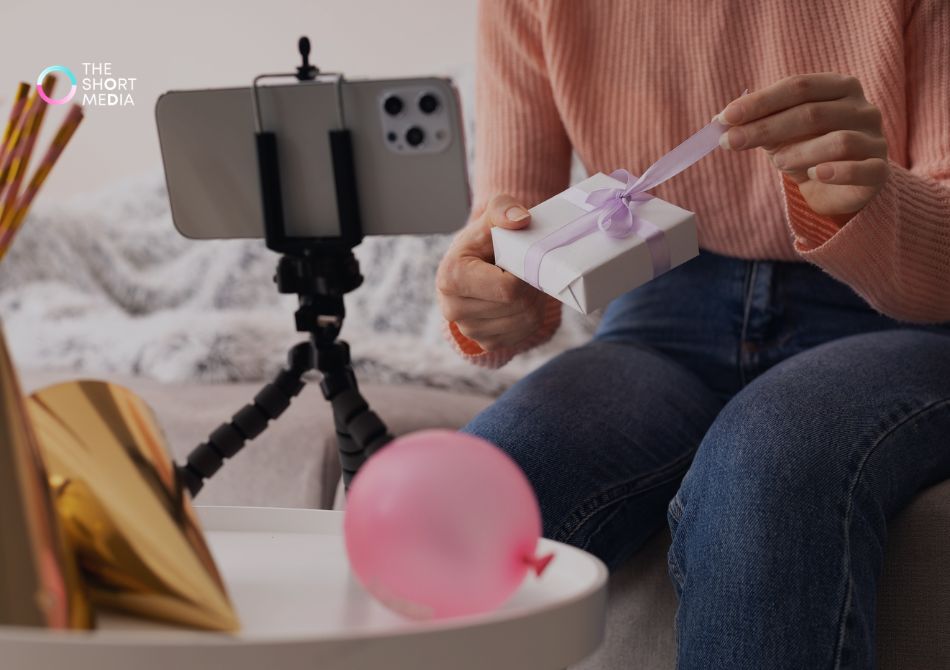
In the last few years, influencer marketing has become one of the most important strategies for brands that want to reach digital consumers. Today, social media plays a vital role in the discovery of products and the decision-making process of consumers. Among these social media platforms, TikTok has become one of the most popular influencer marketing strategies. This is because the platform is based on short videos and the use of the storytelling concept through entertainment content.
TikTok influencer marketing is one of the most popular strategies used today in modern-day marketing campaigns by various brands all over the world. This is because the platform has become one of the most popular social media influencers today. Various brands all over the world are using the platform for promoting their products through influencer marketing campaigns. This is because the platform has become one of the most popular influencers today.
One such strategy followed by the majority of the brands today is the influencer gifting campaign. This is mostly followed by the brands that want to start influencer marketing campaigns but have not yet used the platform.
The logic behind the influencer gifting campaign is quite simple. This is because the brand is giving the influencer the product for free in the hope that the influencer will create content around the product. This is one such popular strategy followed by the majority of the startups today because it is quite cost-effective. However, the campaign is not quite as effective as it sounds in real-time. This is because the majority of the brands that have used the platform for promoting their products have found the campaign quite disappointing. This is especially in the United Kingdom.
However, in most of these cases, the creators who are provided these free products have no obligation to produce promotional content for the brand.
This is becoming a growing issue as more and more brands are looking for ways to effectively increase their promotion services and influencer marketing strategies within TikTok.
As the creator economy continues to grow and develop, it seems that both brands and influencers are becoming more aware of the importance of effective collaboration and compensation.
In this article, we will discuss the issues that are associated with influencer gifting campaigns in the UK. Additionally, we will discuss how influencer gifting campaigns work, how they fail to produce effective results, when they are effective, and finally, how brands need to look at alternative options in order to effectively create influencer marketing strategies.
What Influencer Gifting Campaigns Are
Influencer gifting campaigns are a type of influencer marketing collaboration that is considered to be the easiest type of collaboration.Unlike other influencer marketing collaborations in which a brand pays influencers for promotional content, influencer gifting campaigns involve providing influencers with free products in hopes of receiving promotional content for these products.
In most cases, brands are providing dozens and hundreds of products as part of a large influencer marketing gifting campaign.
The hope is that at least some of these influencers will produce promotional content for these products.
This type of influencer marketing collaboration is usually carried out by companies that are looking to collaborate in influencer marketing campaigns on TikTok for the very first time.
Free Products in Exchange for Content
An influencer gifting campaign is the provision of free products in exchange for content exposure.Unlike other influencer marketing campaigns in which the influencer is provided with incentives in exchange for content exposure, the influencer gifting marketing campaign does not require any contract.
It is based on the assumption that the influencer will be encouraged to produce content because they are enjoying the product they were provided with for free.
For example, a company dealing in cosmetics products could provide its skincare products to many beauty influencers on TikTok and communicate its message by stating that the influencer should consider producing content based on the product they are provided with for free.
From the perspective of the company, this type of influencer marketing collaboration is based on the assumption that this is an attractive option because the company does not need to pay the influencer.
It is also an attractive option because it is less risky, especially when the marketing budget is small.
However, this is the biggest weakness associated with the influencer gifting marketing campaign because it does not require the influencer to produce content.
For example, the influencer does not produce any content.
It is also possible that the content produced by the influencer does not match the marketing objectives.
This is the reason why the influencer gifting marketing campaigns are not successful.
Why Gifting Campaigns Often Fail
The gifting campaigns are successful sometimes but do not perform as well as the influencer marketing campaigns.For example, there are several reasons that lead to the failure of gifting campaigns.
No Performance Commitment
One of the greatest challenges associated with influencer gifting campaigns is the fact that there is no commitment from the influencer to create content about the product they received for free.Unlike in the normal influencer marketing campaigns, there is a contract that outlines the type of content that is going to be created about the product, the time frame within which the content is going to be created, and the type of promotion the brand is going to receive.
These ensure that the brand gets the value of the investment as agreed.
However, gifting campaigns involve the influencer being provided with the product for free without a contract.
When the content creator is provided with the products without paying a fee, it is not a contract but rather gifting the influencer the product from the brand.
It is not guaranteed that the content creator will create content about the product and promote the brand.
Even if the brand asks the content creator to share the experience with the audience, the content creator may not be willing to collaborate if they feel the product is not suitable for the type of content they create or if they lack the time to create the content.
It is not easy for the brand to measure the success of the gifting campaigns.
For the brands that invest in TikTok promotion services, the lack of performance commitment is going to be a challenge when it is required to measure the return on investment.
Low-Quality Content
One other challenge that is common with gifting campaigns is the low quality of the content that is produced.When the content creator is not being compensated, they may not invest the required effort in the production of the content.
For influencer marketing campaigns that involve payment, the content creator is required to produce content that is engaging and thoughtful and aligns with the brand and the content creator.
However, when the content creator is offered the products without any payment, the content creator may not invest the required effort in the production of the content.
For TikTok, the content creator is required to be creative and engaging with the audience.
For such types of content, low-quality content is not going to be successful.
Such videos may not gain much traction and may not lead to any notable brand awareness.
This problem is also a notable concern for brands, especially in cases where the brand is giving away a high volume of products via their gifting campaign.
In such cases, even if multiple influencers are creating content, the quality may be compromised, making it difficult for the brand to convey their marketing message in a unified way.
For brands looking to implement TikTok influencer marketing, it is crucial to ensure that the quality of their content is high.
Poor Creator Fit
Another reason why influencer gifting campaigns do not perform well is because the fit between the creator and the brand is poor.For instance, in cases where brands are sending their products to multiple influencers, it is possible that most of them may not be genuinely interested in the category of products.
For example, a technology brand may be sending their gadgets to lifestyle influencers, who may have an audience interested in fashion or beauty products only.
Though the creator may post about the product, their audience may not find it relevant enough to engage with the content.
For any influencer marketing strategy, it is crucial that the creator and their audience align well with the brand’s product or services.
For example, creators in the influencer marketing space may be focused on creating content around a particular niche, thereby creating high credibility in that area.
Influencers who genuinely use and appreciate the brand’s product are more likely to post high-quality content about the product, thereby making the brand look good in front of their audience.
However, in the case of gifting campaigns, the brand may be sending their product to multiple influencers, thereby compromising on the quality of their strategy, which is a major reason why their influencer marketing strategy may not be effective.
When Gifting Can Still Work
However, when done strategically, the concept of gifting can still be an effective part of the overall TikTok influencer marketing strategy.Two situations where the concept of gifting campaigns can be effective are:
Micro-Creators
Micro-creators are influencers who tend to have a smaller yet highly engaged community.Unlike other influencers who heavily rely on partnerships and other income streams, micro-creators seem to perceive gifting as a potential way to work with other brands.
This is because the micro creator’s audience is likely to be very niche-based and, therefore, may be very willing to work for free as long as they are interested in the product.
This, therefore, makes the concept of gifting very effective in the case of micro creators.
Micro creators are also very effective in the case of TikTok because they are able to come up with very authentic content, which is very effective in the platform.
Although this concept is very effective in the case of micro creators, it is also important to note that there is a need to look at the demographics of the micro creator and the kind of content that they are able to come up with.
Niche Communities
The concept of gifting marketing can also be very effective in the case of niche communities.This is because, in most cases, communities that are based on hobbies are very interested in the product that they are using, and therefore, this concept may be very effective in their case.
However, in the case of niche communities, it is very important to identify the creator who is very passionate about the product and the community.
It is, therefore, very important to identify the creator before the concept is implemented, and this is the only way in which the results can be very effective.
However, it is also very important for the brand to understand the culture of the community that it is trying to reach.
Better Alternatives to Gifting
Although the concept of gifting marketing can be effective in certain instances, most brands looking for TikTok promotion services find that other influencer marketing concepts are much better.Two of these options are paid test campaigns and performance-based incentives.
Paid Test Campaigns
One of the most effective ways to ensure that influencer marketing works for your brand is by using paid test campaigns.Instead of gifting influencers in your industry free products, you can try working with just a few of them and paying them to create promotional content for your brand.
This will help your brand gauge the effectiveness of your influencer marketing strategy in terms of:
- Content creation
- Audience engagement
- Brand alignment
- Conversion rate
Once you are satisfied with the results of your paid test campaign, you can scale up your influencer marketing strategy to include all of these influencers in your marketing efforts.
There are several advantages of using paid test campaigns in influencer marketing compared to gifting influencers in your industry free products.
Firstly, the influencers you pay to promote your brand are likely to be invested in your brand since they are getting paid to create promotional content for your brand.
Secondly, the influencers you pay to promote your brand are likely to create high-quality content since they are getting paid for their efforts.
Lastly, the influencers you pay to promote your brand also provide your brand with valuable data that you can use to improve your marketing efforts in the future.
For all these reasons, paid test campaigns are the best option for any brand looking to invest in marketing on TikTok.
Performance-Based Incentives
Another way to ensure that your influencer marketing efforts are successful is by using performance-based incentives to incentivize your influencers.In this type of influencer marketing, the influencers are rewarded based on their performance in terms of sales generated, clicks, and so on.
One of the main examples of performance-based influencer marketing is affiliate marketing.
This way, they are able to generate sales through the affiliate links and hence are able to earn the commission.
In this way, the performance-based incentives ensure the alignment of the interests of both parties—the influencer as well as the brand.
The creators are encouraged to produce interesting content as they are rewarded based on the performance of the campaigns.
The brands are at an advantage as they are only paying for the results and not the exposure.
Performance-based influencer marketing, along with creative storytelling, is effective in influencer marketing, especially on TikTok.
Case Study: Gymshark’s Creator Partnership Marketing Strategy
Gymshark is a fitness apparel company based in the UK and is a good example of a company that has successfully implemented influencer marketing.Unlike other companies, Gymshark has not opted for the route of gifting campaigns; instead, they opted for a partnership marketing strategy to build the brand.
They partnered with influencers who used their fitness apparel.
These influencers then created content around their fitness journey while using the company’s apparel.
This ensured that the promotion was not scripted, as the influencers used the company’s apparel for their fitness journey.
With the popularity of TikTok, Gymshark decided to partner with influencers to create content for the platform.
Influencers, being fitness enthusiasts, used the company’s apparel in creating content around fitness, fitness challenges, and lifestyle.
The strategy by Gymshark was to develop long-term relationships with influencers.
This ensured that the company created trust in the fitness community, as only influencers who genuinely represented the company were chosen to be their brand ambassadors.
Gymshark, being a small startup company, managed to become a global brand due to the strategy that the company implemented in the marketing arena.
The strategy by Gymshark proves that influencer marketing is effective, but only if it is structured, strategic, and genuine in nature.
Conclusion
Influencer gifting campaigns remain a common tactic for brands exploring TikTok influencer marketing, particularly among companies seeking low-cost ways to generate social media exposure.However, in the United Kingdom, these campaigns frequently underperform due to structural limitations.
Without performance commitments, gifting campaigns often produce inconsistent results. Many creators who receive products never produce content, while others create low-quality posts that fail to engage audiences.
Poor creator-brand alignment further reduces the effectiveness of these campaigns.
Although gifting can still be effective when targeting micro-creators or niche communities, most brands achieve stronger results through more structured strategies.
Paid test campaigns and performance-based partnerships offer greater reliability and measurable outcomes.
The success of companies like Gymshark illustrates the importance of building long-term relationships with creators who genuinely connect with a brand’s audience.
For businesses seeking to scale their marketing on TikTok and achieve consistent influencer marketing results, strategic planning and structured partnerships are essential.
FAQs
1. Why do TikTok influencer marketing gifting campaigns often fail in the UK?
Gifting campaigns frequently fail because they lack contractual obligations and performance guarantees. Influencers who receive free products may not create content or may produce low-effort posts that do not engage their audiences. Without clear expectations or compensation, the brand has limited control over campaign outcomes.
2. When can gifting campaigns still be effective for marketing on TikTok?
Gifting campaigns can work when targeting micro-creators or niche communities where influencers are genuinely interested in the product. In these cases, creators may be more motivated to share authentic experiences with their audiences, even without direct financial compensation.
3. How do TikTok promotion services improve influencer marketing results compared to gifting campaigns?
Professional TikTok promotion services use structured strategies such as paid collaborations, performance tracking, and creator selection based on audience data. These approaches ensure higher-quality content, measurable campaign performance, and stronger alignment between brands and creators.
4. What are better alternatives to influencer gifting campaigns for brands using TikTok?
Better alternatives include paid test campaigns, affiliate marketing partnerships, and long-term creator collaborations. These methods provide clear expectations for content creation while allowing brands to measure engagement, conversions, and return on investment.
5. How should brands choose influencers for successful TikTok influencer marketing campaigns?
Brands should evaluate creators based on audience demographics, engagement rates, niche expertise, and content style. Collaborating with influencers whose audiences closely match the brand’s target market increases the likelihood of meaningful engagement and successful marketing outcomes.