
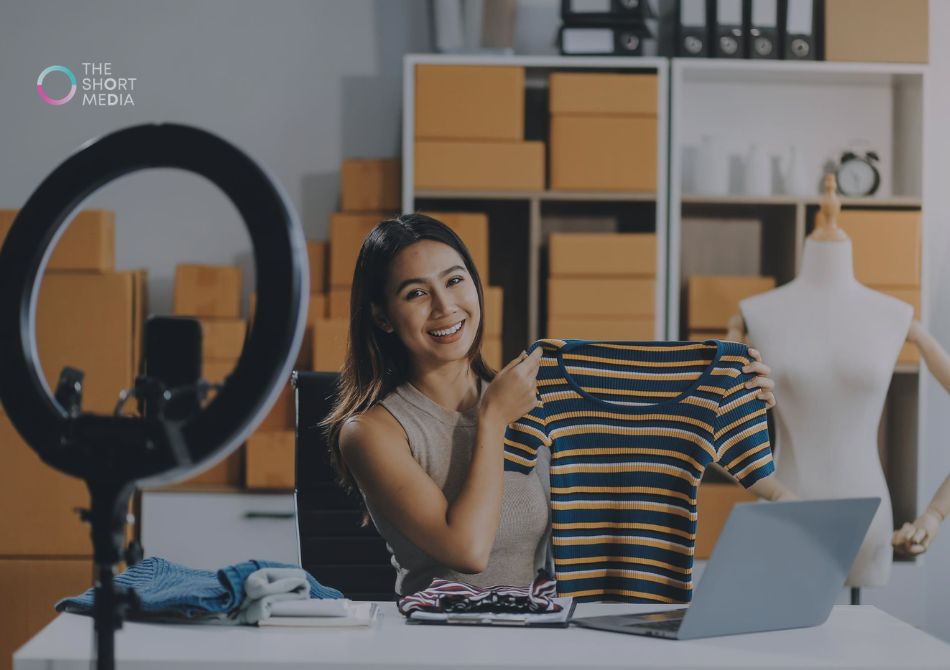
I’ve watched a local candle brand film a product demo on an iPhone, on a cluttered kitchen counter, and beat a polished national retailer’s video by a mile.
Not because the small brand had some magic formula. The video just felt real. You could see the wax texture, hear the owner talking through scent choices, and spot the slightly wonky label in the first batch. People commented on all of it. They asked shipping questions, compared fragrances, even pointed out that the “lavender” one looked more like a bedtime product than a gift item. Useful stuff. Stuff the product page hadn’t answered.
That’s the part a lot of small businesses miss when they start thinking about TikTok. They assume they’re walking into a platform where budget wins. Sometimes budget helps, obviously. Big brands can pay for volume, creators, editing, testing. But on TikTok, money doesn’t automatically make content watchable. In fact, it can make it worse if the team smooths out every rough edge.
So yes, small businesses can compete. Not in every category, not overnight, and not by copying what enterprise brands do. But they can absolutely carve out attention, sales, and repeatable performance if they understand how the platform actually behaves.
Why small brands often look better than bigger ones
A lot of large companies arrive on TikTok with baggage. Legal review. Brand guidelines. A social team trying to sound “native” while three departments rewrite the caption. You end up with content that technically ticks every box and still feels dead.
Small businesses usually have fewer layers. That matters.
If you run a skincare line, a bakery, a local gym, a home storage brand, or even an Amazon product business, you can film faster and react faster. You can post the founder packing orders. You can show the actual before-and-after. You can answer the same customer objection five times in five slightly different videos. That kind of repetition would make some brand managers nervous, but it works because people don’t all see the same post anyway.
I’ve seen a US beauty brand get more traction from a founder explaining why a moisturiser pills under sunscreen than from a glossy campaign edit. Same product. Same week. Different level of honesty.
And when small brands do decide to advertise on tik tok, they often have an advantage: they already know what their customers actually care about because the comments told them.
A tik tok marketing agency can help, but only if they get the culture
Here’s where I’m slightly opinionated. Hiring a tik tok marketing agency is not automatically the smart move for a small business. Some agencies are great. Some are just repackaging standard paid social tactics and calling it TikTok strategy.
A good tik tok marketing agency should understand that TikTok isn’t just a placement for vertical ads. It’s a feedback loop. Organic posts reveal hooks. Comments reveal objections. Creator content reveals what tone people will tolerate from your brand. Paid media then scales what already has some signal.
If an agency wants to start with a big scripted shoot before testing rough concepts, I’d be careful. I’ve seen creators read a script too perfectly and kill the ad in the first three seconds. It sounds silly, but a tiny pause, a half-laugh, a slight stumble — that can make the difference between “ad” and “I’ll keep watching.”
The right tik tok marketing agency will usually push for more volume, more creator variations, and less obsession with spotless branding. Not chaos. Just less stiffness.
If you want to advertise on tik tok, don’t start with “brand awareness”
Small businesses don’t have the luxury of vague objectives. If you’re going to advertise on tik tok, you need to know what you’re trying to move.
For a DTC food brand, that might be first-time purchases from a hero bundle. For a local service business, maybe it’s lead form completions within a specific radius. For a fitness app, maybe it’s trial starts. Different setup, different creative, different follow-up.
This is where TikTok Ads can be very good for smaller players, especially if the product has a visible use case. Cleaning products, kitchen gadgets, posture tools, hair products, pet accessories — these categories often do well because the demo is the pitch. You don’t need a huge media budget if the first few seconds show something satisfying or surprisingly relatable.
A home products brand I worked with had studio footage ready to go. It looked expensive. It also underperformed. A quick clip filmed in someone’s actual kitchen, showing a storage container fixing a messy cupboard shelf, did far better. Not glamorous. Very effective.
That’s a common pattern with TikTok Ads. The content that feels a bit too polished can struggle because users scroll past it before the message lands.
Where big brands still have the edge
It’s not all rosy for smaller businesses.
Big brands can outspend you, test faster at scale, and absorb wasted budget without panicking. They can hire ten creators where you can afford two. They can run broad campaigns while also building retargeting layers and retail support around a product launch.
If you’re trying to advertise on tik tok against a huge beauty retailer during a seasonal push, you’ll feel the difference. CPMs can climb. Creator rates get inflated. Trends get crowded fast.
They also have stronger infrastructure. Better landing pages. More social proof. More stock. More margin flexibility. A small business can win the click and still lose the sale if the website is slow or the offer is confusing.
That’s why a lot of small brands shouldn’t think in terms of “beating” large competitors. Better to think about being more specific, more reactive, and more believable.
The small-business playbook is narrower, but sharper
You do not need to post like a media company. You need to make content that earns attention from the right people.
That usually means a few things:
Show the product in ordinary life
Not every video needs a hook that sounds like a copywriter wrote it. If you sell meal prep containers, show someone actually using them before work. If you sell a recovery tool, show the awkward way people really sit on the sofa after leg day. A fitness brand can get plenty from that kind of honesty.
Mine the comments properly
Comments are often better than survey data. They’ll tell you what people don’t understand, what they don’t believe, and what they think is overpriced. I’ve seen a pet brand discover, from comment threads alone, that people assumed the product was flimsy because the demo never showed someone pressing down on it.
That becomes your next video. And maybe your next TikTok Ads variation too.
Don’t join every trend
This sounds obvious, but brands still do it. Usually late. Usually awkwardly. I’ve watched companies jump on a trending sound nearly two weeks after its peak because someone internally finally approved it. By then, it just looks tired.
Small businesses do better when they use the platform’s style without chasing every trend. Looser edits, direct language, creator-led demos, replies to comments. That’s often enough.
Use paid after you’ve found some signal
You can advertise on tik tok from day one, sure. But if you have limited budget, it helps to know what angle is getting saves, shares, comments, or at least decent watch time organically.
That’s where a tik tok marketing agency can be useful if they’re disciplined about testing. The good ones won’t just throw spend at a weak concept and call it learning.
What TikTok Ads actually look like for a small business
For smaller brands, TikTok Ads usually work best when the setup stays practical.
You need a clear offer. A landing page that matches the video. Creative that doesn’t feel imported from Meta. And enough variations to avoid burning out one decent ad too early.
A local service business in the UK, say a cosmetic clinic or an independent estate agency, might not need dozens of videos per month. But they do need content that feels geographically and culturally aware. The same goes for a UK ecommerce brand trying to sound natural. Audiences notice when a script feels copied from a US ad account and awkwardly localised.
A decent tik tok marketing agency should catch that. Tone matters. So do small details.
And if you’re managing it in-house, keep the testing simple. One strong hook. A clear problem. A believable demo. A direct CTA. Then make five more versions before you make one expensive masterpiece.
So, can small businesses compete?
They can. Quite often, actually.
Not because TikTok is somehow fair. It isn’t. Bigger brands still have more money, more resources, more room for mistakes. But small businesses can move faster, sound more human, and make content that doesn’t feel like it came out of a committee meeting.
That counts for a lot here.
If you want to advertise on tik tok, the goal isn’t to impersonate a major brand. It’s to look like you understand your customer better than they do. Sometimes that means founder videos. Sometimes creator content. Sometimes messy demos filmed in bad lighting that somehow outperform the campaign everyone spent weeks approving.
That’s TikTok. Annoying at times. But for small businesses, also a pretty fair place to start.
FAQs
1. Do small businesses need a big budget to start on TikTok?
Not really. You need enough budget to test, not enough to look impressive. A small product brand can learn a lot from a handful of organic posts and a modest TikTok Ads spend if the creative is solid.
2. Is it better to post organically before running ads?
Usually, yes. Organic content can show you which hooks or demos people actually respond to. It’s not a strict rule, but it’s cheaper to learn from comments and watch time than to pay for weak creative.
3. Should a small business hire a tik tok marketing agency right away?
Depends on your team. If nobody internally understands the platform, a tik tok marketing agency can save time and wasted spend. But if the agency only talks about polish, reach, and generic funnels, keep looking.
4. What kinds of businesses tend to do well on TikTok?
Products with a visible transformation or clear use case tend to have an easier time. Beauty, food, home organisation, fitness tools, cleaning products, and some local services often have enough to show on camera without forcing it.
5. Are TikTok Ads only useful for ecommerce brands?
No. Local services, apps, events, even some B2B-adjacent offers can work if the message is clear enough. The ad just needs a reason to exist beyond “we’re on TikTok now,” which, honestly, is where some brands go wrong.