
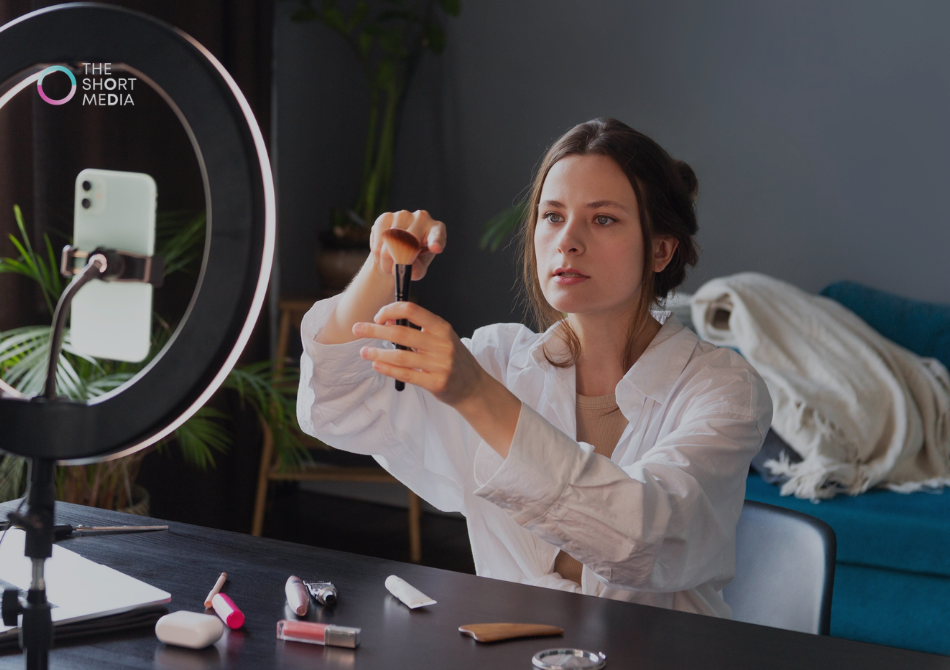
A few months ago, I watched a beauty founder approve a polished TikTok video that looked, frankly, expensive. Great lighting. Clean captions. Product lined up perfectly on a marble shelf. It did fine.
Then a creator posted a much rougher clip filmed in her bathroom mirror, talking through why the cleanser didn’t sting her skin after tretinoin. That one pulled the comments, the saves, the “where do I buy this?” replies, and a very noticeable lift in branded search. Not glamorous. Very effective.
That’s the thing with beauty on TikTok. The brands that scale fastest usually aren’t the ones trying to look the most “premium” on every post. They’re the ones getting their products into the hands of creators who know how to make people stop scrolling, trust what they’re seeing, and actually care enough to click.
For UK beauty brands, that matters even more right now. The market’s crowded, paid social costs aren’t exactly getting friendlier, and consumers have become very good at spotting content that feels over-managed. If you want growth, tiktok influencer marketing isn’t some side experiment anymore. It’s often the bridge between a nice product and a product people keep seeing everywhere.
Why beauty travels so well on TikTok
Beauty is naturally demonstrable. You can show texture, wear, shade payoff, routine order, before-and-after changes, packaging, all in under 30 seconds. A lot of categories don’t get that luxury.
And TikTok rewards specifics. Not “this serum is amazing,” but “this sat well under my SPF and didn’t pill.” Not “long-lasting lip product,” but “I drank an iced coffee and only had to touch up the centre.” That’s where creators are useful. They tend to talk like actual customers, not copywriters.
I’ve seen this play out across everything from acne patches to scalp oils. The content that works usually has one grounded angle:
- a creator showing the product in a real routine
- a comparison against something better known
- a reaction to a common frustration
- a small visual proof point
That last one matters more than brands think. A cleansing balm melting mascara in a sink often beats a studio flat lay. A foundation swatched in daylight near a window can outperform a campaign asset that took two weeks to approve. Sometimes a product demo filmed in a kitchen just wins because it feels less arranged.
TikTok influencer marketing works best when creators aren’t treated like ad space
A lot of beauty teams still brief creators as if they’re booking a glossy magazine placement. Tight script. Key messages repeated word for word. Mandatory opening line. Then they’re surprised when the video feels stiff.
You can usually tell when a creator has been forced into brand language. They pause in odd places. They say the product name too often. The hook sounds like legal got involved.
Good tiktok influencer marketing gives creators a lane, not a script. You want message control, obviously. But you also want the creator’s own phrasing, filming style, and natural objections. If someone usually talks bluntly about sensitive skin, let them do that. If they’re known for “get ready with me” content, don’t push them into a fake testimonial format that nobody expects from them.
For UK beauty brands, especially those trying to scale beyond a loyal niche, this is where momentum starts. Not with one viral post. With repeated creator content that feels native enough to earn attention and useful enough to drive action.
Where tiktok brand marketing often goes wrong
The most common issue isn’t bad creators. It’s bad timing and bad matching.
I’ve seen brands jump on a trend nearly two weeks late because the internal sign-off took too long. By the time the content went live, the sound was already tired and the comments had moved on. Beauty moves fast on TikTok, but not in a chaotic way. There’s just a short shelf life for anything that feels copied.
Then there’s creator selection. Follower count still distracts people. A UK skincare brand might spend heavily on one big beauty name, get decent views, and still struggle to convert. Meanwhile, five smaller creators with strong comment sections and believable routines can quietly outperform on CPA.
That’s why tiktok brand marketing in beauty needs a proper testing mindset. Not random gifting and hope. Not one hero creator and a prayer. A real mix of:
- niche skincare voices
- makeup creators with strong demo skills
- relatable lifestyle creators
- sometimes even non-beauty creators with the right audience overlap
I’ve seen a fitness creator sell more shower products than a classic beauty account because her audience already trusted her post-gym routine content. That kind of thing happens more often than people expect.
What scaling actually looks like for UK beauty brands
Scaling isn’t just “find a viral creator.” Usually it’s a system.
Start with a batch of creators, not one or two. You need enough variation in hooks, formats, skin types, ages, and tones to see what lands. For a UK beauty brand, that also means being realistic about regional relevance, shipping, retail availability, and pricing language. If your product is in Boots, say so when it helps. If delivery is quick across the UK, that can matter more than another brand slogan.
A useful creator mix often includes:
- a few mid-tier creators who know how to sell without sounding salesy
- a wider layer of smaller creators who produce high volumes of believable content
- a couple of wildcard profiles outside your obvious niche
From there, the smart move is to treat creator content as performance inventory. The best organic posts can become paid assets. The strongest hooks can be briefed into round two. Comments can tell you what the landing page forgot to answer.
That last bit is underrated. I’ve seen comments reveal problems the brand team had completely missed: whether a bronzing product works on olive undertones, whether a hair treatment is safe with extensions, whether a lip oil tastes overly sweet. Those are not minor details when someone’s deciding whether to buy.
This is where TikTok Agency support can help, if the team actually understands both creator sourcing and paid amplification. Not every TikTok Agency does. Some are basically middlemen with a spreadsheet and a lot of confidence. The better ones know how to spot creators who can produce content that works both organically and in ads, and they won’t overvalue vanity metrics.
The overlap between creators and paid media is where tiktok brand marketing gets interesting
Organic creator content on its own can do plenty. But when UK beauty brands want to scale faster, the real acceleration usually comes when creator output feeds paid social.
That doesn’t mean turning every creator post into a hard ad. It means identifying what already feels convincing and putting spend behind it carefully. Sometimes the winning asset is not the prettiest one. In fact, it often isn’t.
One beauty brand I worked with had a creator ad that opened with, “I thought this would be another overhyped serum, but…” Slightly negative, a bit risky, and much stronger than the safer version the brand preferred. Another time, a founder wanted to cut a clip where the creator mentioned breakouts during week one. Bad idea. Leaving that in actually improved trust and reduced refund anxiety because the rest of the explanation felt honest.
That’s the practical side of tiktok brand marketing. Less obsession with polished brand control. More attention to what people actually respond to.
When a TikTok Agency is worth it
If your in-house team is small, a TikTok Agency can save a lot of time. Creator outreach, briefing, usage rights, payment, whitelisting, ad testing — it adds up quickly. For a growing beauty brand, that admin alone can become a bottleneck.
But not every TikTok Agency is useful at the same stage.
If you’re early, you need one that can help you test angles cheaply and quickly, not build an overcomplicated framework. If you’re already spending seriously, you want a TikTok Agency that understands creative fatigue, creator refresh cycles, and how to connect content performance to actual sales data, not just view counts.
Ask how they evaluate creators. Ask what happens after one post underperforms. Ask how they handle raw footage usage. Ask for examples from beauty, not just broad consumer brands. A food product and a foundation launch do not behave the same way, even if both live on TikTok.
A better way to think about tiktok influencer marketing
The brands that get the most from tiktok influencer marketing usually stop treating creators like a top-of-funnel add-on. They build creator content into the way the brand grows.
That means your creators aren’t just there for awareness. They’re helping with product education, objection handling, social proof, paid creative testing, retail support, and sometimes even product feedback. A comment section can be more revealing than a survey, honestly.
For UK beauty brands, that’s where the speed comes from. Not from trying to look bigger than you are. From learning faster than competitors, producing more believable content, and giving customers enough real-world proof to move.
Messy bathroom shelf. Bad British lighting. Creator speaking a bit too fast. Fine. If it’s credible, it can work.
FAQs
1. How many creators should a beauty brand start with on TikTok?
Usually more than you think. Five to ten is a sensible testing range if budget allows, because one or two creators won’t show you enough variation in audience response, hooks, or content style.
2. Should UK beauty brands work with micro creators or bigger names?
Both can work, but they do different jobs. Bigger creators can create a spike in visibility, while micro creators often give you stronger content volume and better trust signals in the comments.
3. Is gifting enough, or do creators need to be paid?
For established beauty creators, payment is often necessary if you want quality, timelines, and usage rights handled properly. Gifting can still work with smaller creators, but don’t expect a scalable system from gifting alone.
4. What type of beauty content tends to perform best?
Routine-based demos, honest first impressions, wear tests, shade comparisons, and problem-solution content usually do well. The common thread is that the video shows something useful, not just the product sitting there looking expensive.
5. How does tiktok brand marketing differ from regular influencer campaigns?
It’s usually faster, more iterative, and more dependent on content quality than name recognition. On TikTok, a creator who understands hooks and pacing can outperform someone much larger who posts a flat, overly branded video.