
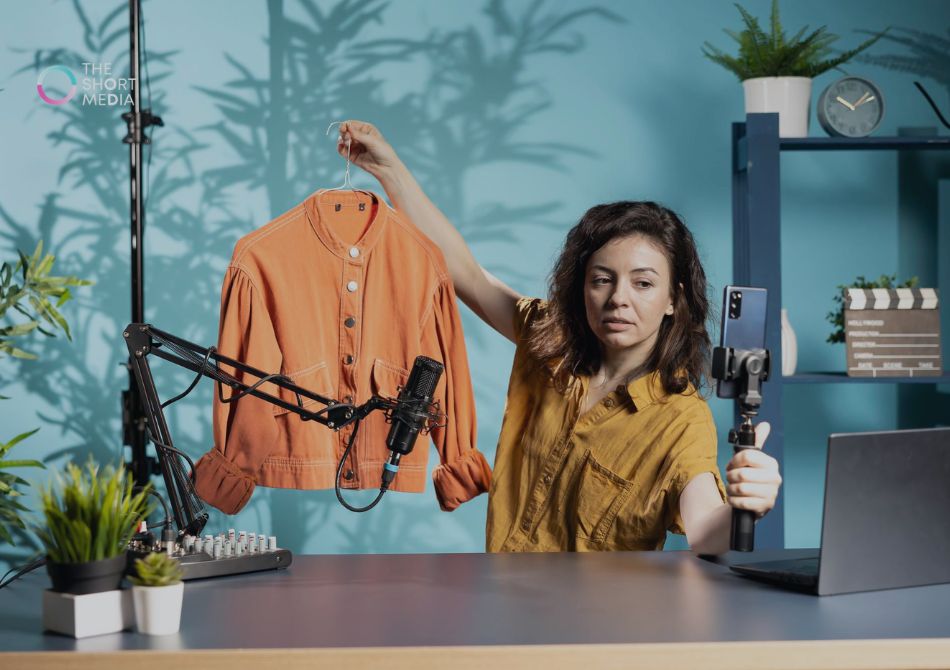
A few months ago, I watched a UK homeware brand spend weeks polishing Meta creative for a spring sale. Nice product shots, tidy copy, proper brand colours, all the usual things. At the same time, they posted a rough TikTok video of someone unpacking storage jars on a kitchen counter in Manchester. Slightly bad lighting. Dog barking in the background. Comments full of people asking where the labels were from.
That scrappy TikTok brought in more qualified traffic than the polished paid social campaign.
Not always, obviously. But often enough that it’s hard to ignore, especially if you’re selling to UK shoppers who are already using TikTok as a place to browse, compare, and quietly judge whether your product feels worth the money.
A lot of brands still treat TikTok like an extra channel. Something to test after Meta, after Google, after email. In practice, it often behaves less like a side platform and more like the place where attention forms earlier. People don’t arrive there in “shopping mode” in the traditional sense, but they do arrive ready to watch, react, and sometimes buy faster than media buyers expect.
Why UK brands get more traction on TikTok than standard paid social
The difference isn’t just audience size or CPMs. It’s the way content gets consumed.
Traditional paid social, especially on Meta, tends to reward familiarity. Users scroll past a lot of ads, recognise the format instantly, and make a split-second decision. If the creative looks too polished, too salesy, or too obviously cut from a campaign deck, it gets ignored. You can still make it work, of course. Plenty of brands do. But the bar keeps moving.
TikTok works differently because the feed still gives room to content that feels discovered rather than delivered. That matters for tiktok business advertising because brands can enter the feed in a way that feels closer to entertainment, product research, or social proof.
I’ve seen this with UK beauty brands in particular. A serum ad with clean studio shots and on-screen claims did fine on Instagram. On TikTok, a creator filming in her bathroom, saying the pump was annoying but the product actually helped with dry patches, outperformed it by a mile. Slight criticism made it feel more believable. A bit messy. Much stronger.
That’s the thing. TikTok often rewards texture over polish.
A tiktok advertising agency will usually tell you this first
If you hire a tiktok advertising agency, one of the first uncomfortable conversations is usually about creative. Not targeting. Not budgets. Creative.
Because most brands come in thinking media buying is the main issue, when really the problem is that their content still looks like paid social from 2019.
A decent tiktok advertising agency will push you away from over-produced assets and toward volume, variation, and creator-led testing. That doesn’t mean “make everything lo-fi and random.” It means understanding what looks native in-feed and what immediately triggers ad blindness.
For tiktok business advertising, native doesn’t mean low effort. It means the ad understands the platform. It gets to the point quickly, shows the product in use, and doesn’t sound like legal approved every line three minutes before filming.
I’ve seen creators read scripts too perfectly and kill performance. You can almost hear the brief. Then the same creator goes off-script, mentions the product stained one white towel but worked brilliantly on grout, and suddenly comments take off. Real comments too, not empty praise.
TikTok catches intent earlier, before the click gets expensive
This is where UK brands often miss the opportunity.
On paid social platforms, especially mature ones, you’re often paying to intercept demand that’s already half formed. Someone has seen the category before. Maybe they’ve visited a site. Maybe they’ve clicked a competitor. You’re entering later in the decision.
TikTok can do that too, but it’s especially strong higher up the funnel without feeling like classic awareness media. A short product demo, a founder clip, a side-by-side comparison, a customer reaction — these can create interest before someone starts searching.
That’s useful for tiktok business advertising if you’re launching something that needs a bit of explanation. Think supplements, cleaning tools, posture products, air fry accessories, niche food brands, even local services.
A UK meal prep company I worked with tested a straightforward “here’s our offer” ad against a video showing a tired office worker unpacking meals after the commute home. The second one wasn’t clever. It just felt familiar to people in London and Birmingham who were fed up with buying sad convenience food at 8pm. Better watch time, better click-through, lower acquisition cost.
Not because TikTok is magic. Because the context was right.
The comments do half the persuasion work
This bit gets overlooked by teams obsessed with click metrics.
On TikTok, the comment section often surfaces the objections your landing page forgot to answer. You’ll see people asking if the shade runs orange, whether the mop head is washable, if delivery to Northern Ireland takes longer, or whether the protein bar actually tastes chalky.
For tiktok business advertising, that’s gold if you’re paying attention. Comments become market research, copy prompts, and creative angles all at once.
I’ve seen Amazon product sellers use TikTok comments to rewrite bullet points on listings. A home cleaning brand spotted repeated questions about whether a tool worked on textured tile, filmed a quick demo the next day, and that follow-up video outperformed the original. Not glamorous. Very effective.
Paid social can generate comments too, sure. But TikTok comments tend to be more revealing because the content invites reaction in a different way. People are less formal. More blunt. Sometimes a bit brutal, honestly, which helps.
Why tiktok business advertising feels less like interruption
A lot of UK consumers are pretty ad-literate at this point. They know when they’re being sold to. They’ve seen enough carousel ads, enough discount overlays, enough “shop now” creative to tune most of it out.
With tiktok business advertising, the ad can still sell without arriving like an ad first. A creator showing how a fake tan sits on pale skin in natural daylight. A dad demonstrating a cordless vacuum in a cluttered terrace house. A small bakery in Leeds filming the morning tray pull and then promoting local delivery. These don’t feel invisible, exactly. They just feel less intrusive.
That’s why tiktok business advertising works especially well for products with visible use cases. Food, beauty, fitness accessories, home gadgets, pet products, things with texture or transformation. If the product “does” something on camera, you’ve already got a starting point.
And if it doesn’t, you need a stronger angle. Story, problem, comparison, personality. Something.
UK nuance matters more than some teams think
A US creative strategy copied directly into the UK market often lands a bit off. The pacing can be too aggressive. The tone too enthusiastic. The references too broad. UK audiences usually respond better when the content feels a little more grounded and less hard-sell.
That’s another reason a tiktok advertising agency with UK experience can help. Not because they have secret tactics, but because they know when an ad sounds imported.
For tiktok business advertising, small localisation choices matter: pricing in pounds, familiar room setups, recognisable accents, references to Boots, Tesco, the school run, the weather, Sunday reset routines. Even humour lands differently. If your creator sounds like they’re auditioning for an infomercial, performance usually drops.
I’ve seen a retail launch do well simply because the creator mentioned she picked the item up during a “quick wander round Westfield” instead of pretending it changed her life. That kind of detail helps.
A tiktok advertising agency can help, but only if the brand lets go a bit
Some brands hire a tiktok advertising agency and still insist on controlling every frame. Every line gets revised. Every creator mention gets sanitised. Every product shot needs to match brand guidelines from a deck made for print.
Then they wonder why results are average.
A good tiktok advertising agency should challenge that. Politely, maybe. But still. TikTok usually performs better when the brand is willing to test content that feels more lived-in. Not off-brand, just less stiff.
That could mean:
- filming product demos in a real kitchen instead of a studio
- letting creators use their own phrasing
- testing founder-led videos that admit small flaws
- responding to comments with follow-up clips instead of static FAQs
That last one is underrated for tiktok business advertising. A follow-up video answering “does this work on oily skin?” can outperform a carefully planned campaign asset because it meets a real objection at the right moment.
It’s not that paid social is dead. It’s that TikTok often gives you more room
Meta still matters. You probably shouldn’t stop running it if it’s profitable. But many UK brands are finding that TikTok gives them more creative room to discover what actually resonates before scaling it elsewhere.
That’s often the real value. TikTok becomes the testing ground. You learn which hooks get attention, which objections keep appearing, which demos make people save or share, which creator style feels believable. Then you can adapt those learnings across channels.
For tiktok business advertising, that’s a much healthier way to think about the platform than treating it as just another media line item.
Because when it works, it’s not only driving conversions. It’s showing you how customers actually talk about the product. And that’s often more useful than a polished campaign report.
FAQs
Q1: Is TikTok only useful for younger audiences in the UK?
Not really. That assumption is usually outdated by about three planning cycles. Plenty of brands selling to people in their 30s, 40s, even older, are getting traction if the product is relevant and the creative doesn’t feel forced.
Q2: Does TikTok need a big content budget to work?
No, but it does need output. That’s different. You don’t necessarily need expensive production, though you do need enough creative variation to test angles, hooks, and formats without running the same tired asset for six weeks.
Q3: How long does it take to see results from tiktok business advertising?
Sometimes you’ll spot useful signals in the first week — watch time, thumb-stop rate, comments, saves. Profitable conversion performance can take longer, especially if the account is still figuring out what kind of message the audience responds to.
Q4: Should UK brands use creators or make content in-house?
Usually both. In-house content gives you speed and product knowledge. Creators give you natural delivery and a face people will actually watch. The sweet spot is often a mix, not a decision between the two.
Q5: What kinds of products struggle on TikTok?
Products that are hard to show, hard to explain, or hard to care about quickly. That doesn’t mean they can’t work. It just means the creative burden is heavier. If you sell something visually dull, you’ll need a stronger story or a very clear pain point.