
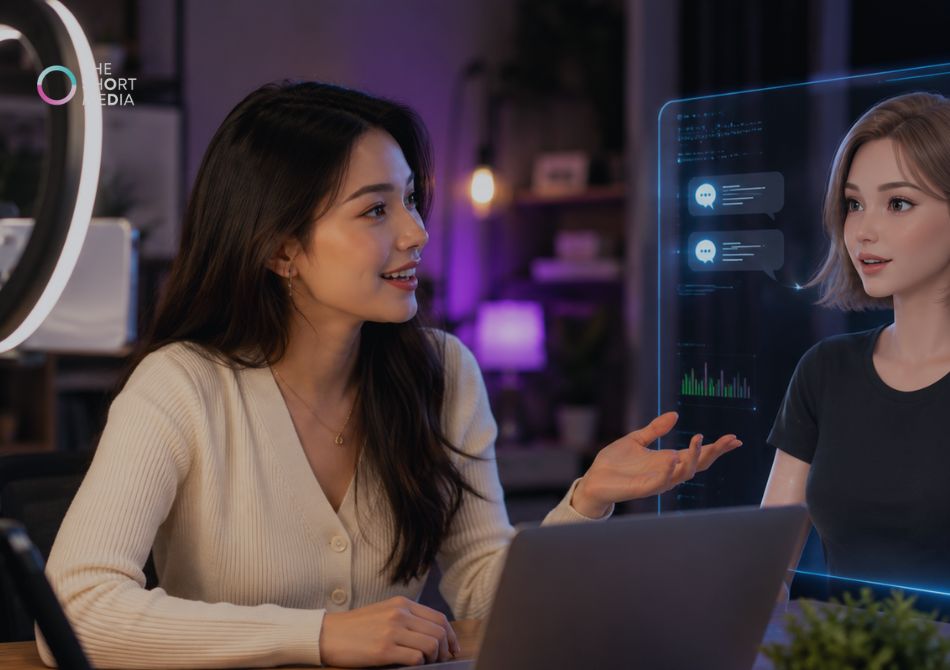
A few months ago, I saw a skincare brand run two TikTok ads for the same product. Same hook, same offer, same landing page. The only real difference was the face on camera. One was a human creator who looked a little stiff, like she’d memorized the script too carefully. The other was an AI avatar built to feel casual, filmed in a fake-but-convincing bedroom setup. Weirdly enough, the avatar version held attention longer in the first three seconds.
That doesn’t mean human creators are on the way out. Not even close. But it does tell you where tiktok digital marketing is heading: toward a stranger mix of automation, performance testing, synthetic personalities, and content that doesn’t always come from a real person with a ring light in their apartment.
For brands in the UAE and elsewhere, this shift is already showing up in campaign planning. Teams that used to ask, “Which influencer should we book?” are now also asking, “Can we test an AI presenter in Arabic and English?” Different question. Very different production model.
TikTok digital marketing is getting less human-looking — and more scalable
AI avatars and virtual creators are appealing for one simple reason: volume.
Most brands don’t struggle with ideas. They struggle with output. They need ten hooks, six intros, three languages, paid versions, organic versions, creator-style edits, Spark-ready cuts. Then legal wants changes. Then the product team updates the claim. Then the trend is dead by Thursday.
That’s where AI starts to look practical.
In tiktok digital marketing, AI avatars let brands produce iterations quickly without rebooking talent, resetting a studio, or chasing creators for one more revision. A fitness app can test a male coach avatar, a female coach avatar, and a “customer story” format in a week. A home product brand can make localized videos for Dubai, Abu Dhabi, and Saudi audiences without rebuilding the shoot from scratch.
And honestly, some of this content works because TikTok users are already used to slightly odd media. Green-screen explainers, text-heavy confessionals, stitched reactions, voice filters. The platform has never required glossy realism. Sometimes a virtual creator that feels a bit uncanny still performs fine because the hook is strong and the pacing is right.
Where virtual creators actually help
A lot of articles make this sound bigger or cleaner than it is. In practice, AI avatars are useful in a few specific lanes.
Fast testing before a real creator shoot
This is probably the most sensible use case.
Before spending on talent, some teams are using AI avatars to test messaging. Say you’re launching a collagen powder in the US. You can run three versions:
- “I noticed this helped me hit my protein target”
- “Here’s how I mix this before Pilates”
- “I thought this would taste chalky, but…”
The comments and hold rate will tell you a lot. Not everything, but enough to avoid wasting budget on the wrong angle. I’ve seen comments reveal objections the product page completely missed — texture, shipping time, whether it breaks a fast, whether it’s safe during pregnancy. Useful stuff.
A few tiktok marketing partners are getting good at this kind of pre-validation before moving into creator whitelisting or broader paid social rollout.
Multilingual and regional adaptation
This matters a lot in the UAE. Brands often need English and Arabic versions, and sometimes content that feels slightly different depending on the audience. Not just translated. Adjusted.
An AI avatar can help produce faster local variants, especially for service businesses, retail launches, hospitality, and ecommerce brands trying to cover multiple audience segments. A TikTok Growth Agency working with a clinic, for example, might test one avatar-led explainer for expats and another version with different phrasing for local audiences.
That said, if the language sounds too formal or the lip sync is off, people notice immediately. TikTok comments are brutal when something feels fake in the wrong way.
Always-on content for smaller brands
Not every business can afford a steady stream of creators.
A local meal prep service, an Amazon product seller, or a DTC home goods brand might use virtual creators to keep an account active between bigger shoots. Not every post needs to be a masterpiece. Some just need to demonstrate the product, answer objections, or react to a common comment.
A kitchen-filmed demo of a storage container set, even with a virtual presenter voiceover, can outperform polished studio footage if it feels more believable. I’ve watched that happen more than once.
The part nobody should ignore: AI content can feel dead on arrival
Here’s the problem. A lot of AI avatar content looks technically fine and performs terribly.
Why? Because TikTok punishes content that feels over-controlled. If the script is too clean, if the pauses are too perfect, if the expression never changes, people scroll. Fast. It’s the same issue you get when a human creator reads a brief word-for-word and forgets to sound like a person.
This is where experienced tiktok marketing partners matter. Not because they have some secret software, but because they understand platform behavior. They know when an AI avatar should sound rougher, shorter, less polished. They know that a beauty ad filmed like a founder talking in her bathroom often lands better than a pristine branded explainer.
A good TikTok Growth Agency won’t pitch virtual creators as a replacement for everything. They’ll use them where they make sense and keep humans in the mix where nuance matters.
Human creators still carry trust better, especially for certain categories
If you’re selling skincare, supplements, postpartum fitness, or anything with personal risk attached, a real person still tends to do more heavy lifting.
Not because audiences are anti-AI. They’re anti-bad content.
For categories where credibility is fragile, people want texture. A real shelf in the background. A weird pause. A creator saying, “Okay, this part surprised me,” in a way that doesn’t sound generated. Even comments under the post can influence performance; when viewers ask practical questions and the creator answers naturally, it helps the ad keep breathing.
That’s why many tiktok marketing partners are blending formats now. AI avatars for testing and scale. Human creators for social proof, reviews, and founder-led storytelling. It’s less of an either-or decision than people make it sound.
What smart brands are doing with AI avatars right now
The better teams aren’t using AI because it’s trendy. They’re using it to fix production bottlenecks.
A few examples:
Retail launches and product drops
A beauty retailer launching a new line can use virtual creators to tease shades, explain bundles, or run countdown-style paid assets before creator seeding arrives. Then human creators take over once reviews and tutorials start rolling in.
Local services
Clinics, salons, real estate teams, and education providers in the UAE can use avatar-led explainers for basic FAQs, offer announcements, or location-specific promos. A TikTok Growth Agency can spin up several versions quickly, which matters when offers change every few weeks.
Amazon and DTC products
For products that need demonstration more than personality — organizers, cleaning tools, kitchen gadgets, pet accessories — AI-supported content can work surprisingly well. Especially if the product itself is visually satisfying. The trick is not making it look like a slide deck with a face attached.
Choosing between tools and strategy
There’s already a mini gold rush around avatar platforms, synthetic UGC tools, and virtual spokesperson apps. Some are decent. Some really aren’t.
But software isn’t the main decision. Strategy is.
If your team doesn’t understand hooks, retention, comments, offer framing, and why one ugly-looking product demo can outperform a brand film, the avatar won’t save you. This is where strong tiktok marketing partners still earn their keep. They can tell whether the issue is the creative concept, the audience match, or the fact that your “authentic” AI spokesperson sounds like a polite customer service bot.
Good tiktok digital marketing still comes down to reading the feed properly. Not just producing more assets.
So, are virtual creators worth it?
Usually, yes — if you treat them as part of a content system, not a magic fix.
They’re useful for testing, localization, speed, and filling content gaps. They’re less useful when the brand needs emotional credibility, lived experience, or a creator who can improvise around audience reactions.
The brands that do well here won’t be the ones replacing every human face with an AI clone. It’ll be the ones using both on purpose. A TikTok Growth Agency with actual platform instincts can help sort that out, and frankly, that matters more than whichever avatar tool is getting hyped this month.
Because on TikTok, people don’t reward effort. They respond to what feels watchable. Sometimes that’s a founder in bad lighting. Sometimes it’s a virtual creator reading a sharp script in two languages. Usually it’s the team that knew the difference.
FAQs
Q1: Are AI avatars good for every TikTok campaign?
Not really. They’re better for testing, explainers, repeated promos, and multilingual content than for highly personal testimonials. If you’re selling something sensitive or trust-heavy, a real creator often carries the message better.
Q2: Do users care if a creator is virtual?
They care more about whether the content feels awkward, boring, or misleading. If a virtual creator is disclosed clearly and the video is actually useful, most viewers won’t treat it like a scandal.
Q3: Can small businesses in the UAE use this effectively?
Absolutely, especially if they need English and Arabic variations without doing full shoots every time. Clinics, restaurants, ecommerce brands, and training centers can get a lot of mileage out of simple avatar-led content.
Q4: Will AI avatars replace influencers?
That’s not how this is shaping up. Human creators still bring lived experience, ad-libbing, and trust that synthetic content struggles to fake. The more common setup is a mix.
Q5: How do tiktok marketing partners use AI without making content look robotic?
Usually by scripting less, not more. Shorter lines, imperfect phrasing, faster cuts, and visuals that do some of the talking. The polished corporate explainer style tends to die quickly in-feed.